
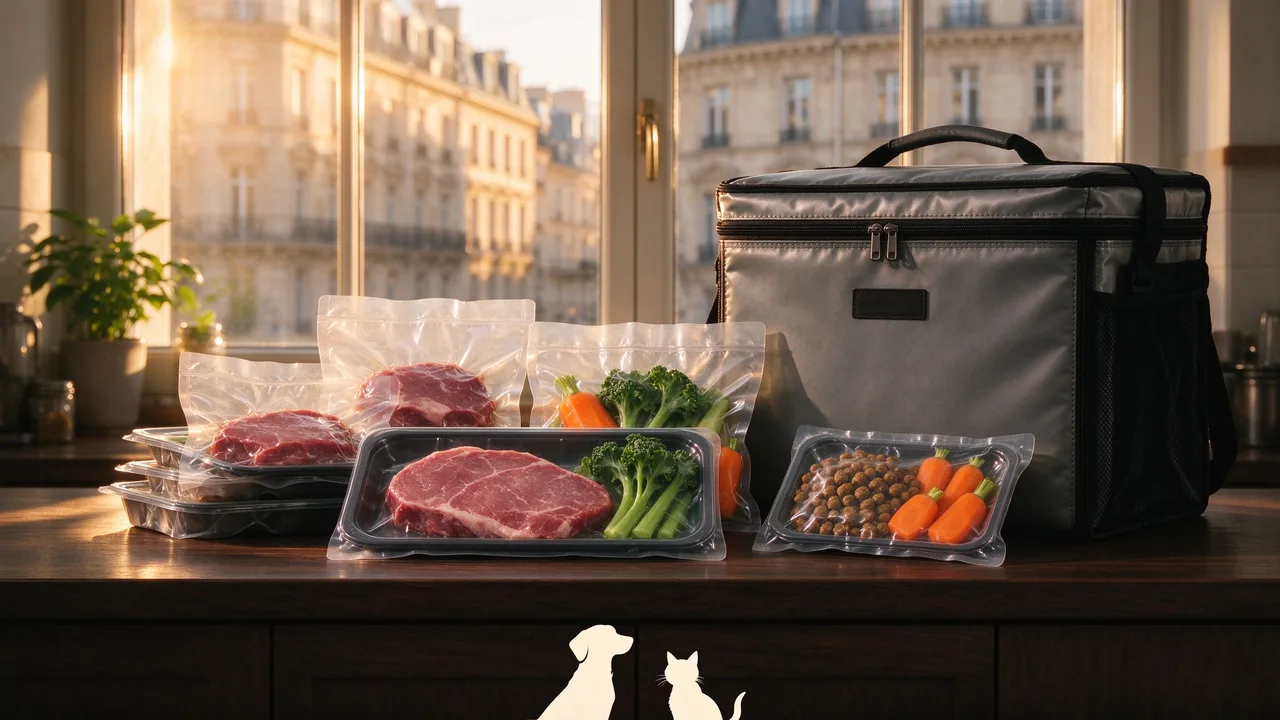
# European Fresh Food D2C Expansion: PsiBufet Enters Slovakia and What It Means for Fresh Meal Brands
In early November 2026, UK-based Butternut Box's Polish fresh food brand PsiBufet announced entry into Slovakia, continuing its direct-to-consumer delivery of fresh, customized dog meals. The brand now operates in Slovakia, Czechia, Italy, and Poland, with fresh meals produced at its partner Sam's Kitchen factory. The move is a useful sample for studying how fresh food subscription brands expand across borders in Europe.
Three Points From the Expansion
1. Category Remains Fresh Customized Dog Meals
PsiBufet's core product is fresh meals customized per individual dog and delivered directly to consumers, without relying on offline shelf distribution. Formula, portion, and flavor are adjusted around individual information, fitting the fresh food D2C subscription model.
2. Expansion Moves Along Neighboring Markets
Starting from Poland, the brand entered Czechia, Italy, and Slovakia in sequence, choosing geographically and consumption-wise adjacent European markets rather than launching across broad regions at once. This pace lets it reuse cold-chain delivery, packaging, and customer service systems.
3. Capacity Relies on a Partner Factory
Fresh meals are produced at the Sam's Kitchen factory; the brand owns the formula system, user data, and channel operations, while manufacturing is handled by the factory. This light-brand plus contract-manufacturing structure is common in fresh food D2C.
The Logic Behind the European Fresh D2C Model
1. Subscription Lifts Repurchase Certainty
Periodic delivery converts one-time purchases into ongoing subscriptions, letting brands forecast usage in advance and give factories a demand baseline for scheduling. This is also what makes small-batch, multi-formula fresh food workable.
2. Customization Builds Brand Identity
Adjusting formula and portion by dog size, age, and flavor preference is the main differentiator of fresh food versus shelf-stable extruded kibble. Custom information must connect the order system, formula library, and factory batching.
3. Cold Chain and Packaging Define the Delivery Radius
Fresh meals place higher demands on delivery temperature, packaging barrier, and arrival time. Before crossing markets, brands should confirm the cold-chain route and packaging plan rather than launching marketing first.
Three Takeaways for Domestic Fresh Brands
1. Validate One City or Region Before Expanding
The European brand's neighbor-by-neighbor pace shows fresh D2C expansion is constrained by cold chain and fulfillment. Domestic brands should first validate repurchase and fulfillment cost in a core region before replicating to adjacent cities.
2. Formula Library and Order System Come Before Capacity
The core asset of customized fresh meals is a reusable formula library and order-to-batch mapping. Factories schedule by order batch; brands should build data and formula systems first, then expand capacity.
3. Contract Manufacturing Must Match Fresh Process and Cold Chain
Fresh meal OEM requires cooking/portioning, short shelf-life management, batch retention, and cold-chain handoff. When selecting a factory, verify fresh line experience, shelf-life plan, and packaging barrier rather than capacity alone.
Brand and Factory Division for Fresh D2C
| Stage | Brand side | Factory side |
|---|---|---|
| Formula system | Formula framework, flavor preference, individual adjustment rules | Formula implementation, ingredient costing, guarantee-value review |
| Orders and scheduling | User data, subscription cycle, order consolidation | Batch scheduling, batching records, batch traceability |
| Packaging and fulfillment | Packaging design, channel and customer service | Packaging sourcing, portioning, short shelf-life management |
| Quality compliance | Label copy, claim boundaries | Ingredient testing, retention samples, outgoing inspection |
Bottom Line
PsiBufet's Slovakia entry shows European fresh D2C keeps expanding steadily along neighboring markets, with the model resting on subscription repurchase, customized formulas, and factory support. For domestic brands, the transferable lesson is the rhythm of validating fulfillment and repurchase in one region first, then replicating across regions, plus the division where the brand owns data and formulas and the factory owns manufacturing and quality control.
Brands starting a fresh subscription or small-batch customized meal line can work with **Mixiaoqi pet food OEM/ODM** in Guangzhou on fresh meal formula sampling, small-batch scheduling, packaging specs, and short shelf-life evaluation, starting from the first SKU and first-city fulfillment.
---
FAQ
**Q: Must a fresh D2C brand build its own factory?**
A: Not necessarily. European samples often use brand operations plus partner factory manufacturing: the brand owns formulas, user data, and channel; the factory owns production and quality control.
**Q: What is the biggest constraint of the fresh subscription model?**
A: Cold-chain fulfillment radius and short shelf-life management. Cross-region expansion requires confirming delivery route, packaging barrier, and arrival time first.
**Q: Should a new brand start with fresh or dry food?**
A: Judge by channel and fulfillment capability: launch fresh meals after regional cold chain and subscription repurchase work; for shelf e-commerce and nationwide shipping, kibble carries lower shelf-life and logistics pressure.
Developing a fresh pet food product?
Share your target market, product direction, format and expected volume — we will help structure a project plan.
Submit a project brief