
# Premium Cat Food Relaunch: Dry Food Plus Multi-Texture Wet Food Portfolio Strategy
In November 2026, Austrian premium cat food brand Cat's Love completed a relaunch as its updated range entered channels: the kibble line adds an innovative freeze-dried coating, while the wet line covers pâté, ragout, and filets textures. The new lineup reflects a clear shift in premium cat food launches: brands no longer rely on one staple food to win the market, but use a "dry base plus multi-texture wet" portfolio to cover different feeding scenarios.
Three Signals From the Relaunch
1. Wet Texture Becomes a Product Line Differentiator
The same meat source is processed into pâté, ragout chunks, and shredded fillets to match different palates and feeding scenarios. Texture choice is becoming a visible option consumers compare, alongside flavor.
2. Kibble Carries Nutrition Structure; Wet Food Covers Palatability and Scenes
Coated kibble carries the daily staple nutrition and shelf stability, while wet food adds hydration, texture variety, and flavor rotation. The two complement each other inside one brand rather than replacing each other.
3. Premium Brands Build the Texture Matrix Before Functional Concepts
Cat's Love's relaunch shows the first priority is completing basic formats—kibble, pâté, ragout, shreds—with functional ingredients layered into the formula, rather than leading with a functional concept.
Market Data on Wet Textures and Packaging
1. Texture Formats
Per Future Market Insights' 2026 wet food report, chunks in gravy and shredded fillets together account for about 62.9% of the 2026 texture category; pâté is often aimed at kittens, senior cats, or pets preferring a smooth texture.
2. Packaging Formats
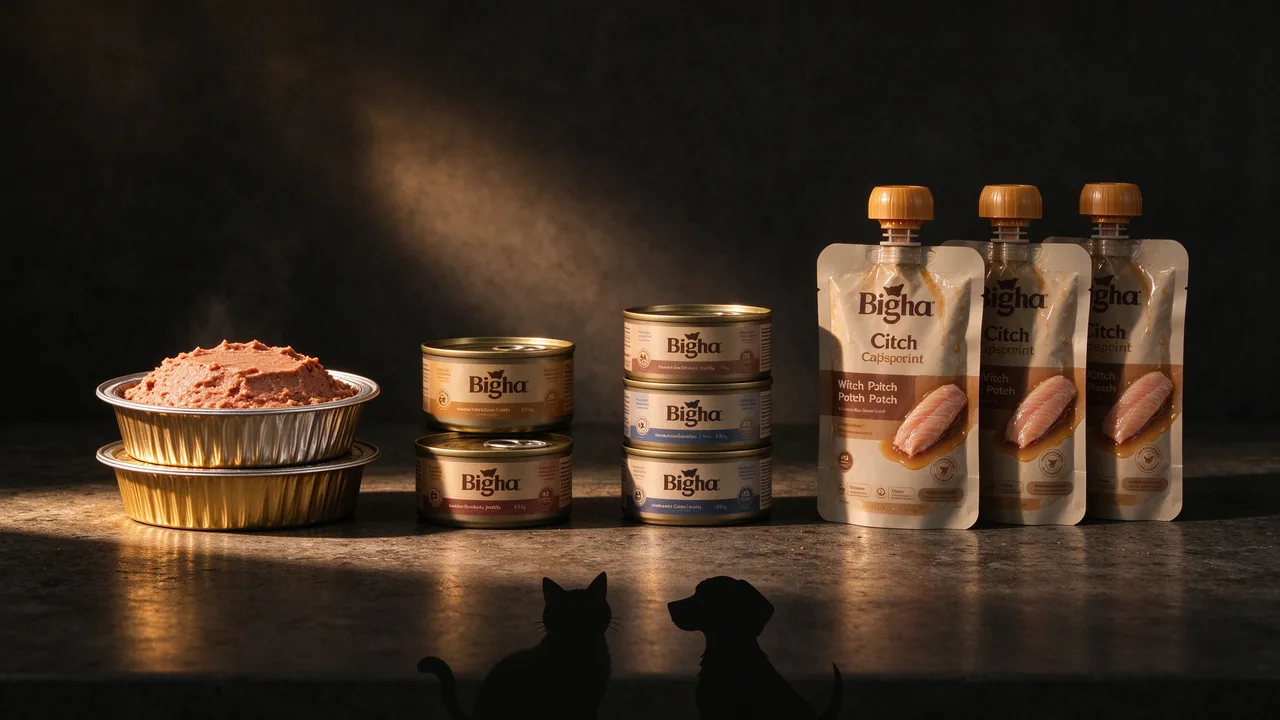
Single-serve retort pouches and aluminum trays represent about 59.7% of 2026 wet packaging valuation, with portion control, ready-to-serve convenience, and reduced opened-product storage pressure; ring-pull metal cans continue to serve multi-cat households and larger portions.
3. Consumption Scenarios
Single-serve packs cover daily meal supplements, while cans and boxes cover stock-up purchases. Brands usually plan both packaging formats rather than a single one.
Recommended Launch Sequence for Domestic Brands
Step 1: Lock the Kibble Formula and Specs First
Kibble is the repurchase base: validate meat ratio, pellet specs, shelf life, and packaging size before adding wet SKUs.
Step 2: Start With One or Two Core Wet Textures
Enter with gravy chunks or shredded fillets, which have higher market acceptance; pâté/mousse follows as a second tier. Rolling out every texture at once creates excessive MOQ and inventory pressure.
Step 3: Align Packaging With Scenarios
Use pouches or small trays for daily single meals and cans for stock-up; design net weight, ingredient list, and guaranteed analysis separately, and review labels independently.
Step 4: Run Formula and Label Compliance Together
Wet ingredients must also follow catalog ordering rules, with additives checked against the additive catalog. Texture descriptions must match the actual process form; a pure pâté cannot be labeled as chunks.
Co-Packer Capabilities for a Combined Launch
1. Separate dry and wet lines so process parameters do not interfere;
2. Formula and forming experience across wet textures (pâté, gravy chunks, shreds);
3. Cross-format packaging support: pouches, aluminum trays, cans;
4. Ingredient traceability, batch testing, and label compliance review;
5. Flexible small-batch, multi-SKU mixed scheduling.
Bottom Line
Cat's Love's relaunch shows premium cat food competition has moved from a single staple formula to portfolio combination plus texture scenarios. For domestic new brands, the safe path is to solidify the kibble base first, add one or two core wet textures for scenarios, and lock packaging specs and label compliance during sampling.
Brands building a dry-plus-wet portfolio can work with **Mixiaoqi pet food OEM/ODM** in Guangzhou on multi-texture dry and wet formula sampling, packaging format plans, and small-batch mixed scheduling, staged from the first SKU.
---
FAQ
**Q: Must a new brand do both dry and wet food?**
A: No. Validate one staple repurchase first, then add the other; launching wet as a scenario-supplement SKU carries lower risk.
**Q: How many wet textures should be launched at first?**
A: Start with one or two core textures, then expand to pâté or mousse after repurchase validation.
**Q: Are pouch and can costs very different?**
A: Packaging material, sterilization process, and specs affect unit cost; factory quotes and MOQ modeling give the accurate comparison.
Developing a fresh pet food product?
Share your target market, product direction, format and expected volume — we will help structure a project plan.
Submit a project brief