
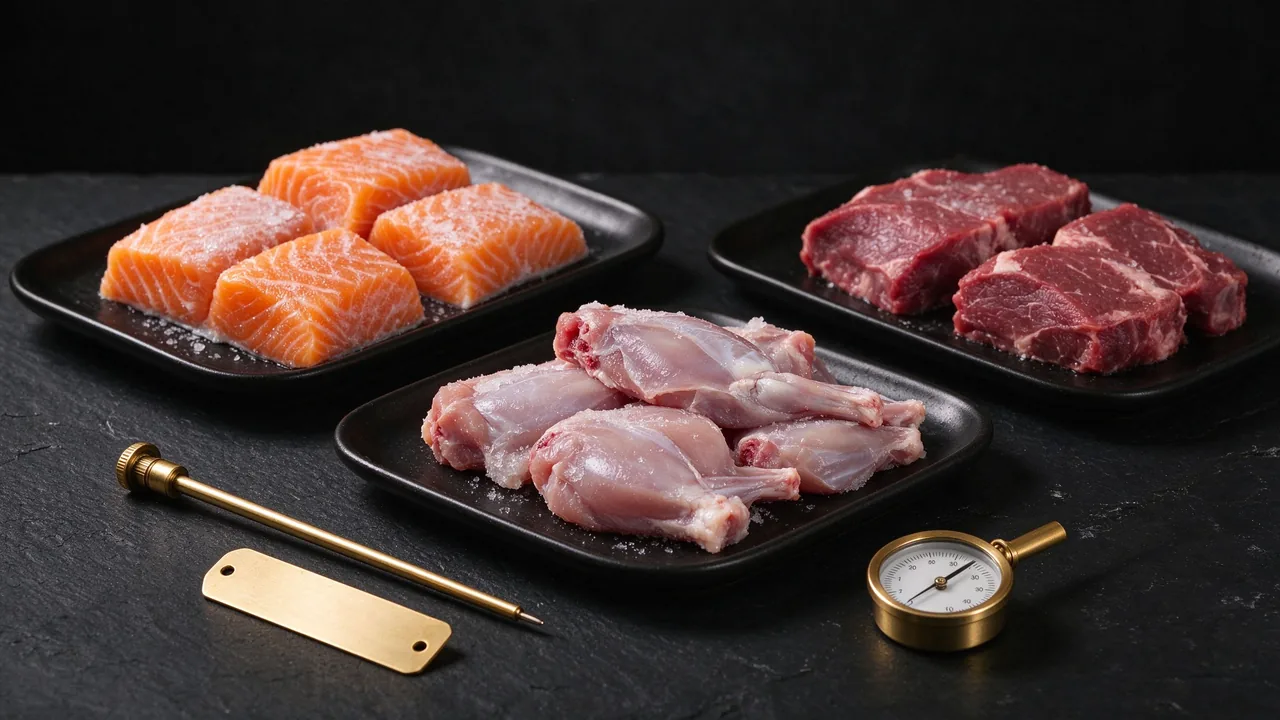
On November 24, the Czech State Veterinary Administration (SVS) published the results of a special inspection of imported pet food: nine frozen raw products failed, from four manufacturers, two in Germany, one in Austria and one in the Netherlands. One game mix exceeded the lead limit by more than three times, and four products showed elevated Enterobacteriaceae counts. Products from the German manufacturer PAEX had already been flagged on October 29; this notice added new items from the same producer. For raw pet food OEM buyers, it reads as an inspection checklist.
The value here is not another recall headline. It puts two vague areas on the table: where lead in raw materials comes from, and what an elevated Enterobacteriaceae count actually tells you.
What the notice says
- Nine products failed, from four manufacturers.
- One game mix containing venison and other game meats exceeded the lead limit by more than three times.
- Four products had elevated Enterobacteriaceae, including several PAEX items.
- Named items include PAEX Junior-Mix 500 g, lot 06/28 A265; a game mix 500 g, lot 09/28 D371; beef with cartilage 500 g, lot 07/28 A311; ground chicken necks 500 g, lot 06/28 A254; Kiezebrink KB Mix Lamb 500 g from the Netherlands, best before July 28, 2027; Loys Fleischhandel Fit Mix 1000 g beef with offal from Austria, best before May 25, 2028; and other Graf BARF products.
- Dozens to hundreds of packs reached the Czech market. Some were held in warehouses, and unsold lots are being withdrawn.
- The authority's consumer notice states that high Enterobacteriaceae indicates poor process hygiene or inadequate storage conditions, that counts multiply quickly after thawing, and that thorough heating can reduce bacterial risk while lead is not removed by heat.
Why lead keeps showing up in raw materials
Lead is rarely introduced by processing equipment. It comes with the raw material.
- Bone and cartilage: bone is a major accumulation site. Bone meal, bone-in meat and cartilage carry more risk than pure muscle.
- Offal: liver and kidney are involved in metabolism and excretion and accumulate more than muscle.
- Game: sourcing is dispersed, and age and origin are hard to control, so exposure varies widely.
- Materials close to soil: root vegetables, plant ingredients and insufficiently washed raw materials can carry soil particles.
These four categories are common in raw formulations, which is exactly why supplier declarations are not enough.
Lead is typically tested by ICP-MS and judged against the destination market limit and the contract. The workable approach is to screen raw-material lots first and test finished goods by risk: bone, game and offal are high-risk lots tested every batch, while muscle can follow supplier audits plus periodic testing. Testing only finished goods means the material has already entered several batches by the time results arrive.
What Enterobacteriaceae actually indicates
Enterobacteriaceae is a hygiene indicator group, not a single pathogen. A high count usually points to one of two things: process hygiene control is weak, or frozen storage and transport conditions are inadequate. Freezing is not a safety net. Thawing, cutting, re-freezing and cold-chain breaks all amplify counts.
Records tell you more than a single result. Three records explain most problems: raw material receiving temperature, processing-room temperature and dwell time, and the finished-goods transport temperature curve. If one link is broken, later testing only proves it after the fact.
Sampling language can be borrowed from import protocols. China's General Administration of Customs Announcement No. 16 of 2026 sets the Enterobacteriaceae requirement for imported non-commercially sterile Canadian pet food at n=5, c=2, m=10, M=300: five samples, at most two between 10 and 300, and none above 300. Writing that counting scheme into an OEM contract is more actionable than saying "meets the national standard."
A three-tier raw-material system for raw pet food OEM
Sort materials by risk and let testing frequency follow the tier.
- High risk: bone and cartilage, game, offal, single-species aquatic protein. Check a supplier COA for every lot and test lead and Enterobacteriaceae by lot.
- Medium risk: fresh meat plus meat meal in a mixed formula. Test monthly or quarterly and combine with supplier audits.
- Low risk: pure muscle and plant ingredients. Rely on supplier audits, periodic testing and retained samples.
The point of grading is to spend the testing budget where it changes the decision. Testing every lot of every ingredient is unaffordable; relying on an annual panel cannot catch lot-to-lot variation.
How to release a batch
Raw food has no heat step to fall back on, so release control has to be stricter than for kibble.
1. Lock on arrival: physically separate the pending area, use a single status label, and never mix with approved material.
2. No release before results: emergency release needs written authorization, separate segregation, traceability and a recall plan.
3. Retain samples: keep the lot past shelf life, and keep temperature records for frozen retains.
4. Build a record chain: supplier, raw lot, test report, production batch, finished goods and shipment should be traceable in one line.
5. Handle failures: segregate, return or dispose of according to regulation. Do not dilute a failed lot into a larger blend, and do not send it to an unapproved channel.
Where importer and manufacturer responsibility divides
In this kind of notice, responsibility is rarely held by one party.
- Importer: country and establishment eligibility, import permits, Chinese labeling, port inspection and recall coordination.
- Manufacturer: supplier approval, incoming inspection, process control, finished-goods release and retained samples.
- Brand owner: formula and claims, final label approval, recall decisions and consumer communication.
Put four things in the contract: who tests, who pays for return or destruction, who faces the regulator, and how quickly a failure must be notified. When responsibility is vague, every party will describe itself as merely the processor.
Five questions a brand owner should ask
1. Where are the lead reports for the last three lots of bone, offal and game materials?
2. What Enterobacteriaceae sampling plan is in the contract, including sample count, m and M?
3. Can cold-chain temperature records be pulled by lot, and are breaks alarmed?
4. Are pending and approved materials physically separated with unique status labels?
5. Are the disposition route and notification deadline for a failed lot written down?
The barrier in raw pet food OEM is not freezing. It is raw-material grading and release evidence. Lead is a question of anatomical part; Enterobacteriaceae is a question of hygiene and cold chain. Turn both into records someone can inspect, and you are not betting the brand on one finished-goods test. Mixiaoqi pet food OEM/ODM grades raw materials by risk before setting testing frequency and release conditions, then discusses formula and price.
FAQ
Q1: Which products were involved?
A: The Czech State Veterinary Administration flagged nine imported frozen raw products from four manufacturers, two in Germany, one in Austria and one in the Netherlands. One game mix exceeded the lead limit by more than three times, and four products had elevated Enterobacteriaceae.
Q2: Where does lead usually come from?
A: Bone and cartilage, offal, game and materials close to soil accumulate more lead. Most contamination comes from the animal part and its environment rather than from processing.
Q3: What does a high Enterobacteriaceae count mean?
A: It is a hygiene indicator. A high count usually points to weak process hygiene or inadequate frozen storage and transport; counts multiply quickly after thawing.
Q4: How should a raw pet food OEM set testing frequency?
A: Grade by risk. Test lead and Enterobacteriaceae every lot for bone, game and offal; test monthly or quarterly for fresh meat and meat meal; use supplier audits plus periodic testing for muscle ingredients.
Developing a fresh pet food product?
Share your target market, product direction, format and expected volume — we will help structure a project plan.
Submit a project brief