
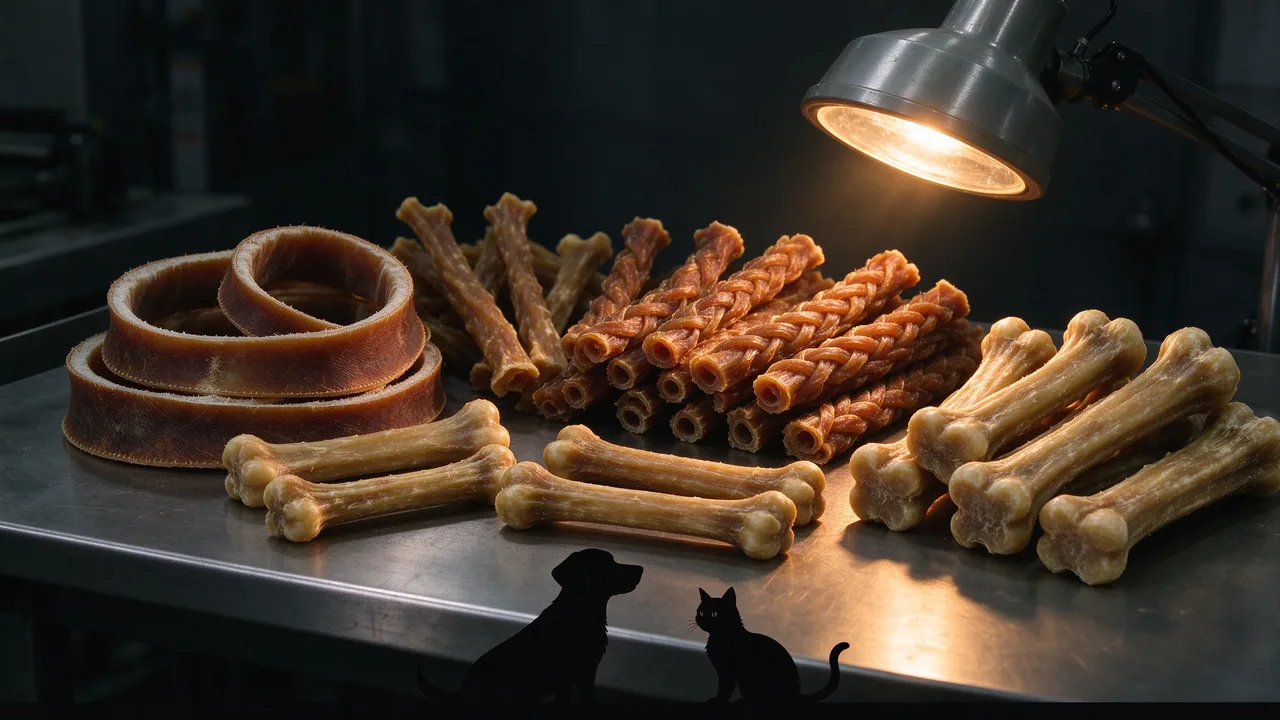
# Dog Chew and Bone OEM Guide: Rawhide, Plant Fiber, Protein Chew Materials, Process, Export Qualification
Dog chews and bones are one of the most fragmented pet treat categories: rawhide rolls and rings, plant-fiber bones, cornstarch bones, protein gel chews, and meat-wrapped chews each imply different sourcing, forming process, durability, and export compliance paths. This guide compares mainstream materials, covering process points, co-packer checks, export qualification, and MOQ references for brands and traders building a chew category.
Mainstream Chew Materials
| Material type | Common forms | Process points | Market notes |
|---|---|---|---|
| Rawhide | Rolls, rings, knot bones, sticks | Hide cleaning, degreasing, pressing, forming, drying; fat residue and moisture controlled | Animal-origin; export needs source quarantine evidence; some markets require hide-component labeling |
| Plant fiber/starch bone | Bone shapes, sticks | Plant fiber or cornstarch mixed and molded, dried | Mostly plant-origin; label must state fiber and starch species honestly |
| Protein gel chew | Molded chewable bone | Protein/gel ingredient mixture poured and formed, softer texture | Animal/plant source must be distinguished on the ingredient list |
| Meat-wrapped chew | Gel bone coated with meat meal/strips | Core formed first, then coated with flavoring or meat layer, dried and bonded | Composite ingredients; label explains core and outer layer separately |
| Durable composite bone | Multi-layer braided or pressed | Multi-layer material pressed or braided, then dried | Structure stability and fragment rate are outgoing inspection focus |
Process and Quality Controls
1. Sourcing and Pre-Treatment
Rawhide requires hide origin, degreasing level, and quarantine evidence; plant materials require fiber/starch specification sheets. Raw material moisture and fat indicators affect finished durability and shelf life.
2. Forming and Drying
Chews gain chewing toughness through drying setting; drying temperature and duration affect hardness, fragment rate, and packaging moisture uptake. Mold precision defines bone-shape consistency.
3. Finished Indicators
Common outgoing checks: moisture content, fragment rate, appearance integrity, odor control. Hardness standards differ by material; durability expectations should be confirmed with the client at sampling stage.
4. Packaging and Moisture Protection
Chews soften and spoil after absorbing moisture; packaging barrier and desiccant pairing match the material. Individual small packs support shelf life and channel repacking.
Export-Oriented Co-Packer Checklist
1. **Animal-origin qualification**: hide source evidence and quarantine/slaughter documents available for rawhide;
2. **Factory sanitation system**: records across pre-treatment, production workshop, drying, and packaging;
3. **Destination-market access**: animal-origin, label language, and ingredient declaration requirements checked for the target market;
4. **Material development**: hardness, size, bone shape, and wrapping adjustable to client needs;
5. **Packaging support**: individual bags, bulk trays, mixed multi-spec packing;
6. **Testing and traceability**: batch testing, retention samples, raw lot to finished batch traceability;
7. **Flexible scheduling**: mixed multi-material multi-spec batches and small-order trial runs.
Material Selection and MOQ Reference
Selection Logic
- Durable chewing scene: rawhide rolls/rings, multi-layer pressed composite bones;
- Plant-origin or vegetarian positioning: plant fiber/starch bones;
- Softer texture, seniors or small breeds: protein gel chews;
- Palatability uplift: core chew coated with meat meal or strips.
Common MOQ Ranges (Industry Reference; Factory-Specific)
| Material type | Common MOQ reference | Influencing factors |
|---|---|---|
| Rawhide single spec | By kg/piece, commonly several thousand pieces | Hide batch, drying capacity |
| Plant fiber bone single spec | Mold-spec MOQ | Mold development, molding batch |
| Meat-wrapped composite chew | Wrapping process stacked on core MOQ | Outer ingredient and bonding process |
| Multi-spec combo | Per-spec calculation | Mold and line-change cleaning |
Common Misconceptions
1: Hardness Is Always Better
Excessive hardness is unsuitable for small breeds and seniors; durability should match target breed size and age, with hardness gradients confirmed in samples.
2: Plant-Origin Chews Need No Ingredient Traceability
Plant fiber and starch still require source specs and ingredient declaration; "natural" or "plant" descriptions must be supported by the ingredient list, not used as unsupported wording.
3: Export Documents Are the Trader's Job
Hide evidence and factory sanitation files are the customs-clearance foundation; incomplete factory-side documents block the trader's filing.
Compliance Wording Notes
Chews belong to the chewing treat category; labels and detail pages are limited to chewing texture and daily snack wording, with no extension to oral disease prevention or treatment claims. The ingredient list states core and outer layer honestly, without mixing animal- and plant-origin components.
Bottom Line
Chew selection starts with material process experience: rawhide is judged on hide quarantine and degreased drying, plant chews on fiber/starch specs and mold forming, composite chews on layered structure and fragment rate. Export orders align destination-market access and label language at the sampling stage.
Brands needing chew/bone sampling or export document review can work with **Mixiaoqi pet food OEM/ODM** in Guangzhou on rawhide, plant-fiber, and meat-wrapped composite chew formula sampling, hardness adjustment, and export qualification document checklist coordination.
---
FAQ
**Q: What basic documents are needed for rawhide export?**
A: Typically hide source evidence, factory sanitation system files, and quarantine/ingredient materials required by the destination market; the exact list follows destination access rules and importer requirements.
**Q: Are plant fiber bones and starch bones the same?**
A: Not exactly; fiber bones are formed mainly from plant fiber, starch bones use starch as the binding matrix, and the ingredient list should distinguish them.
**Q: Can chews start with a small trial run?**
A: Most factories support samples and small-batch trials; mold fees, hide batches, and drying capacity affect MOQ, so agree terms during sampling.
Developing a fresh pet food product?
Share your target market, product direction, format and expected volume — we will help structure a project plan.
Submit a project brief