
# FDA Mandatory Recall Battle: What Darwin's Refusal Costs
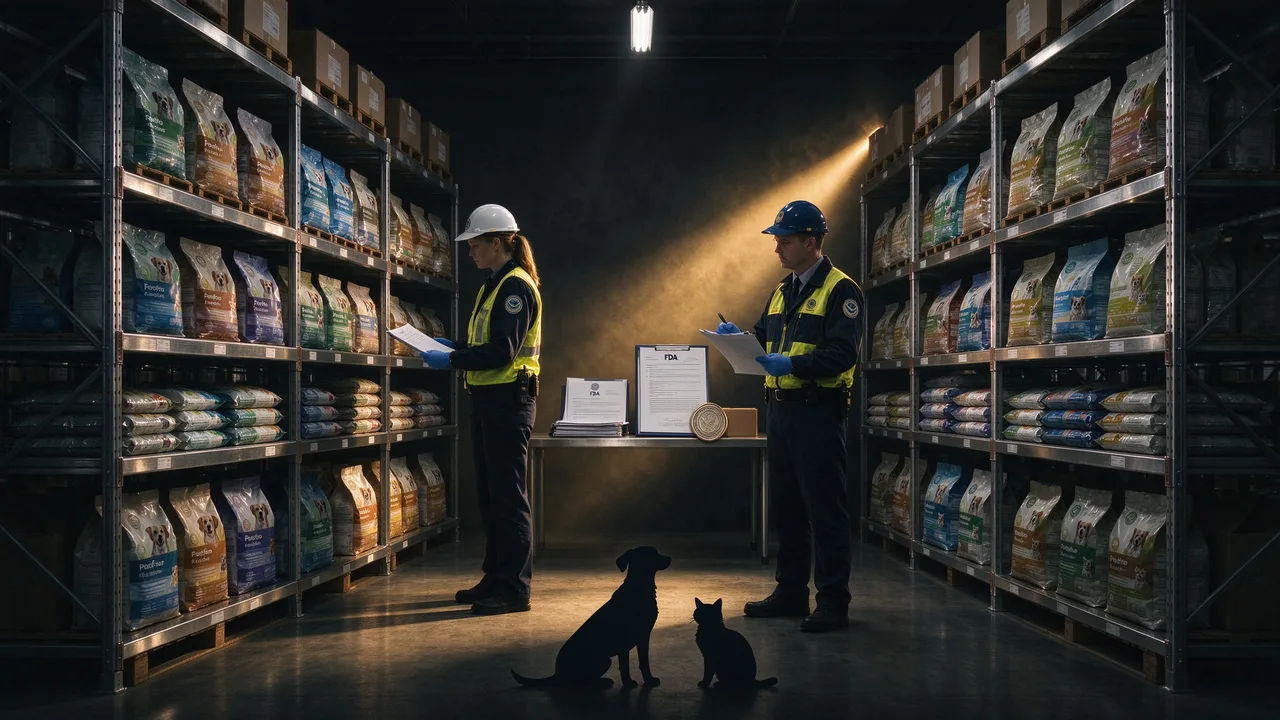
In October 2026, FDA issued a public warning against Darwin's Natural Pet Products (Arrow Reliance): two lots of Natural Selections Chicken Recipe for Cats tested positive for Salmonella, one cat was hospitalized. FDA recommended a voluntary recall, but Darwin's refused. The U.S. Department of Justice then sought a **permanent injunction** in federal court. This is not an ordinary recall — it is a **regulatory compliance battle.**
What Happened
1. **Consumer complaint**: Two cat owners reported GI illness, one hospitalization;
2. **FDA sampling**: Two frozen raw lots (12731, produced Jul 8 2026; 12493, produced Apr 2 2026) tested positive for Salmonella;
3. **FDA recommended recall**: Public advisory on Oct 27 urging voluntary recall;
4. **Company refused**: Darwin's issued a statement saying "food is not being recalled, company is not being shut down" and filed a legal response;
5. **DOJ intervened**: Justice Department sought a permanent injunction on behalf of FDA.
Why Can a Company Refuse FDA?
FDA's "recommended recall" is **not a mandatory order** under U.S. law. FDA can:
- Issue a public advisory;
- Seek a court injunction;
- Seize adulterated product;
- But **cannot directly order a recall.**
Darwin's position: it has Salmonella controls (freezing, formula) and believes risk is manageable. FDA/DOJ position: consumer complaint + positive test + hospitalized cat = recall required, and refusal triggers legal action.
What Refusal Costs
1. Permanent Injunction Risk
If the court grants the injunction:
- The implicated lots are barred from sale;
- Future similar products may require mandatory testing;
- The company faces ongoing court supervision costs.
2. Brand Trust Collapse
The FDA advisory itself is a brand crisis. Darwin's says "thousands of families rely on us," but consumers read: "FDA says your cat food has Salmonella and the company won't recall it."
3. Retail De-listing
U.S. retailers (Petco, PetSmart, etc.) have near-zero tolerance for FDA advisories. They typically de-list proactively without waiting for a court order.
Lessons for Chinese Co-Packers and Brands
1. "Recommended Recall" Is Not Optional
Many Chinese companies think "FDA only recommended." In the U.S. market, **a recommended recall is effectively mandatory** because channels and consumers act immediately.
2. Complaint Response Speed Matters More Than Test Results
Darwin's problem is not Salmonella itself (raw food risk is inherent) — it is **refusing to engage with regulators.** The right playbook:
- Immediately recall voluntarily;
- Cooperate with FDA;
- Communicate transparently.
3. Raw Food Compliance Costs Are Rising
Post-Darwin's, FDA oversight of raw/frozen food will only tighten. Chinese co-packers exporting raw or fresh food to the U.S. need:
- Salmonella control validation (environmental monitoring, pathogen control steps);
- Per-batch testing records;
- Recall SOP and mock drills.
What to Ask a Co-Packer
If you export raw or fresh food:
- Is there a written recall SOP? When was the last mock drill?
- FDA registration, FSMA compliance records?
- Environmental monitoring data available?
- What is the decision process when FDA issues an advisory?
Bottom Line
The Darwin's case shows: **regulatory recommendations are not negotiable.** Refusing a recall looks tough but stacks brand, channel and judicial risk. For Chinese co-packers and brands, understanding FDA enforcement logic and building recall/compliance systems matters more than litigation.
If you need a U.S.-export-ready co-packer with per-batch testing and mock recall drills, **Mixiaoqi pet food OEM/ODM** in Guangzhou runs per-batch microbiology testing and simulated recall exercises.
---
FAQ
**Q: What is the difference between FDA recommended and mandatory recall?**
A: FDA has no direct mandatory recall power for food. A "recommended recall" is administrative, but channels and consumers act immediately — effectively mandatory.
**Q: What happens to Darwin's?**
A: DOJ seeks a permanent injunction. The court may bar implicated products and require ongoing testing.
**Q: What does a Chinese co-packer need to export to the U.S.?**
A: FDA food facility registration, FSMA preventive controls compliance, per-batch testing, recall SOP.
Developing a fresh pet food product?
Share your target market, product direction, format and expected volume — we will help structure a project plan.
Submit a project brief