
# Fish Meal Price Rising: How to Adjust Pet Food Formulas
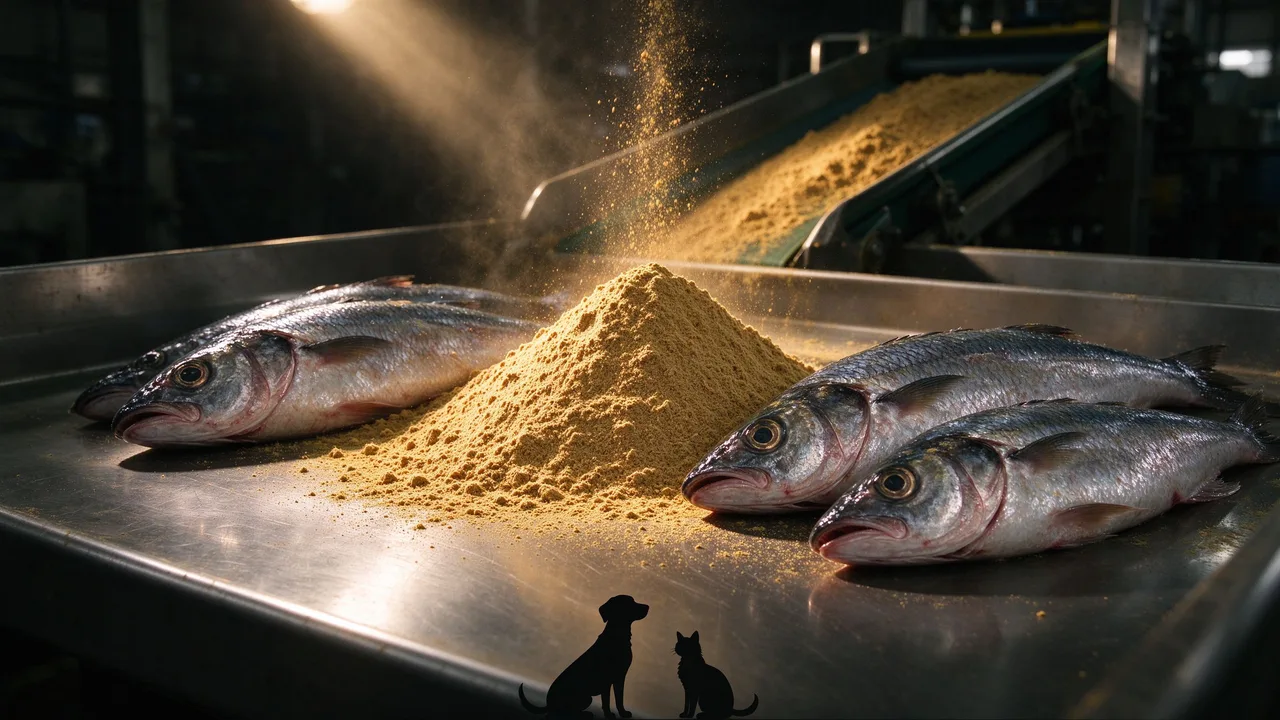
In early November 2026, Chinese port fishmeal markets showed clear strengthening: continuous daily warehouse withdrawals, tight premium-grade inventory, and premiums on both standard and special grades. FOB Peru quotations held steady. This means **domestic fishmeal delivered prices are biased upward in the short term.** For pet food brands relying on fishmeal as a key animal protein source, formula adjustment and cost control are urgent.
Fishmeal's Role in Pet Food
Fishmeal is one of the most digestible and amino-acid-complete animal proteins in pet food:
- Crude protein typically 65%-68%;
- High lysine and methionine;
- Highly palatable — especially critical for cat food.
But fishmeal is volatile. During price upcycles, proactive formula adjustment beats absorbing cost.
Three Signals of Rising Prices
1. Continuous Port Withdrawals
Daily warehouse withdrawals mean feed mills are restocking, inventory is draining, and new supply cannot keep up.
2. Premium-Grade Widening
Standard feed uses regular grade, but pet food requires premium grade (fresh, low histamine, low salt). Tight premium grade means pet-grade fishmeal is more expensive.
3. FOB Peru Steady
Peru is the largest fishmeal exporter. Steady FOB means no international oversupply; the domestic rise is structural port tightness.
Four Formula Adjustment Directions
Direction 1: Partial Replacement — Poultry Meal for 10%-20% Fishmeal
Safest approach. Poultry meal (65%-70% crude protein) is domestically available and 15%-25% cheaper. Key:
- Keep 10%-20% fishmeal for palatability and Omega-3;
- Use poultry meal to make up protein volume;
- Label reads "poultry meal + fishmeal," preserving the "contains fish" perception.
Direction 2: Boost Omega-3 — Fish Oil + Flaxseed
When fishmeal is reduced, use **fish oil (direct EPA/DHA) + flaxseed (ALA)** as cheaper Omega-3 sources:
- Fish oil 0.5%-1.5%;
- Flaxseed 2%-5%;
- Run palatability tests — too much fish oil causes fishy odor.
Direction 3: Plant Protein — Pea Protein, Potato Protein
Premium grain-free formulas already use pea protein (80%+ crude protein), the cheapest protein source. Note:
- Plant protein amino acid profile is inferior; supplement lysine and methionine;
- Keep pea protein at 5%-15% — too much hurts stool quality;
- Label plant protein ratio honestly.
Direction 4: Product Structure — Poultry Meal for Economy Lines
If a brand has multiple SKUs, economy lines can drop fishmeal from 15% to 5%-8% with poultry/beef meal. Premium lines keep fishmeal. This lowers blended cost without diluting premium positioning.
Formula Adjustment Red Lines
1. Do Not Break Guaranteed Analysis
If label says 30% crude protein, actual cannot drop below. Run nutrition calculations to guarantee.
2. Do Not Break Palatability
Fishmeal drives cat food intake. After reduction, run a two-bowl palatability test — do not extrapolate.
3. Do Not Relax Freshness Testing
Replacement ingredients (poultry meal, meat meal) need histamine, acid value, peroxide testing. Cheap does not mean loose.
Cost Reference (Cat food, 36% crude protein)
| Option | Fishmeal | Poultry meal | Delivered cost change |
|---|---|---|---|
| Original | 15% | 10% | baseline |
| Option 1 | 10% | 15% | -5%~-8% |
| Option 2 | 8% | 17% + fish oil | -8%~-12% |
| Option 3 | 5% | 20% + pea protein | -12%~-15% |
Recommendations
1. **Run formula sensitivity analysis with co-packer**: model fishmeal up 20%, 30%, 50%;
2. **Lock pricing with long-term contracts**: 3-6 month price lockouts to hedge short-term volatility;
3. **Do not swap ingredients last minute**: start palatability and nutrition testing 3 months ahead;
4. **Update labels in sync**: formula changes require updated ingredient lists and guaranteed analysis.
For brands optimizing formula under fishmeal cost pressure, **Mixiaoqi pet food OEM/ODM** in Guangzhou's R&D team runs formula sensitivity analysis and balances poultry meal, fish oil and pea protein replacements. Bring your current formula.
---
FAQ
**Q: How long do fishmeal upcycles last?**
A: Typically 2-4 months, tied to Peruvian fishing season and domestic inventory. The November 2026 round is expected to last into mid-December.
**Q: Can I replace fishmeal entirely with poultry meal?**
A: Not recommended. Poultry meal's amino acid profile and palatability are inferior; total replacement hurts intake and stool in cat food.
**Q: What testing is required after formula change?**
A: Nutrition (crude protein/fat/ash/moisture) + palatability test + hygiene (histamine, acid value, TPC).
Developing a fresh pet food product?
Share your target market, product direction, format and expected volume — we will help structure a project plan.
Submit a project brief