
# Freshpet's $150M 2026 Capex: Why Fresh Pet Food Capacity Is Still Expanding
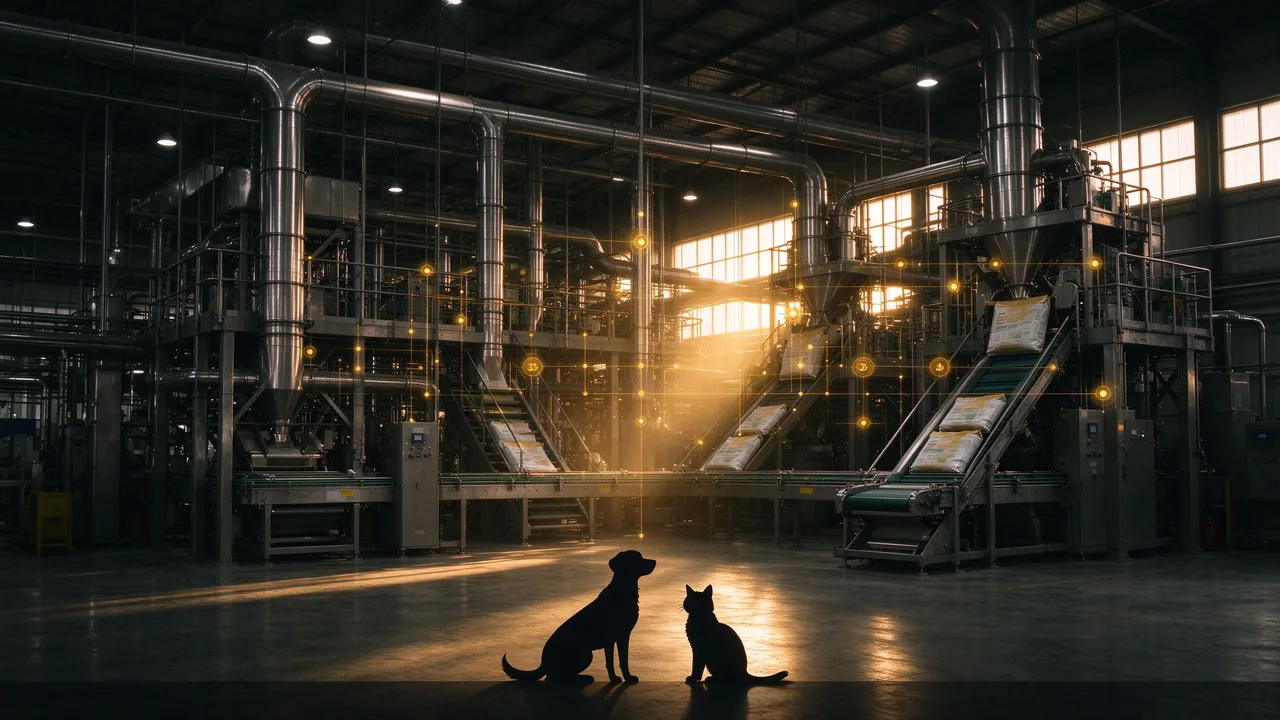
Against a backdrop of Q3 margin pressure across pet food, one segment is still expanding capacity: **fresh pet food**. Freshpet's latest investor materials show ~$150M in 2026 capex, mainly for fresh food manufacturing capacity and new packaging technology, with three bag lines already on the new technology targeting ~100 basis points of annualized adjusted gross margin improvement.
What Freshpet Is Investing In
From the investor deck, Freshpet's 2026 capex focuses on three areas:
1. **New bag technology**: three bag lines already deployed (one full line, two lite lines), expected to deliver ~100 bps of annualized adjusted gross margin improvement;
2. **Bethlehem Kitchen and other fresh plant expansion**: owned manufacturing lets Freshpet iterate on fresh food technology;
3. **Supply chain automation**: reducing unit labor cost.
**The signal: fresh pet food competition has shifted from "do you have fresh food" to "packaging efficiency + capacity scale."**
Why Fresh Food Is Expanding Counter-Cyclically
1. Fresh Food Is One of the Few Double-Digit Growth Segments
While kibble growth slows to low single digits and Q3 margin pressure mounts, fresh, low-temperature baked and air-dried "minimally processed" categories still grow double digits. Euromonitor calls this "affordable premium" — shoppers pay for visible ingredients and transparent processes.
2. Packaging Is the Fresh Food Battleground
Fresh food's historic pain points: short shelf life, cold chain cost, expensive packaging. Freshpet's new bag technology targets **cost per ounce of packaging**. If new bags cut packaging cost while extending shelf life, fresh food closes the value gap with kibble.
3. Owned Manufacturing vs Co-Packing
Freshpet chooses owned plants over outsourcing, because **fresh food process barriers (cook, rapid chill, MAP packaging) have become high enough to justify heavy capex.** This is why Chinese fresh pet food co-packers are adding steam-cook and MAP lines in 2026.
What It Means for Chinese Co-Packers
Opportunities
- **Export demand**: Western fresh brands expanding will source cost-effective SKUs from China;
- **Packaging tech spillover**: new bag technology, MAP packaging and barrier films are diffusing from the US into Chinese supply chains;
- **Domestic fresh brands**: Douyin/Xiaohongshu fresh brands are raising funding and need co-packers.
Pressures
- **Freshpet's owned capacity may pull back in-house work**;
- **Packaging cost competition**: Chinese co-packers that cannot adopt new technology will see margin pressure;
- **Cold chain compliance tightening**: Western requirements on cold chain and labels are rising.
Recommendations for Chinese Co-Packers
1. **Add fresh steam-cook and MAP lines**: table stakes for 2026-2027, not optional;
2. **Track packaging tech**: high-barrier films, recyclable packaging, new bag formats;
3. **Build flexible small-batch capability**: Freshpet does scale; new brands need small-batch trials — a Chinese edge;
4. **Prepare export certifications early**: FDA registration, FSMA and BRCGS are tickets into Western fresh supply chains.
Bottom Line
Freshpet's $150M capex is not one company's move — it is the signal that **fresh pet food has moved from "category education" to "scale efficiency."** Chinese co-packers that add steam-cook lines, MAP packaging and flexible small-batch capability will capture the upside; those still forcing traditional extrusion lines into fresh food will fall behind.
If you are evaluating a fresh food co-packer, inspect three things on site: **steam-cook line, MAP packaging station, cold chain shipping capability**. **Mixiaoqi pet food OEM/ODM** in Guangzhou has deployed fresh steam-cook lines and MAP packaging, supporting small-batch trials through mass production.
---
FAQ
**Q: Who is Freshpet?**
A: A leading US fresh pet food brand, centered on refrigerated fresh food and cold-chain delivery, with owned plants including Bethlehem Kitchen.
**Q: What is the core difference between fresh and kibble?**
A: Fresh food uses low-temperature cooking, no high-heat extrusion, higher moisture, requires refrigeration, shorter shelf life but better ingredient retention.
**Q: Can Chinese co-packers export fresh pet food?**
A: Yes, but FDA registration, FSMA compliance, BRCGS and cold-chain packaging are hard thresholds.
Developing a fresh pet food product?
Share your target market, product direction, format and expected volume — we will help structure a project plan.
Submit a project brief