
# Fresh Pet Food Goes Retail: Three New Jobs for Co-Packers Moving From Cold Chain to Ambient Shelf
On November 16, The Pets Table, the premium pet food brand from HelloFresh, announced a national launch at Whole Foods Market: about 500 stores plus the retailer's online channel, with seven ambient shelf-stable items. It is the brand's third major retail partnership.
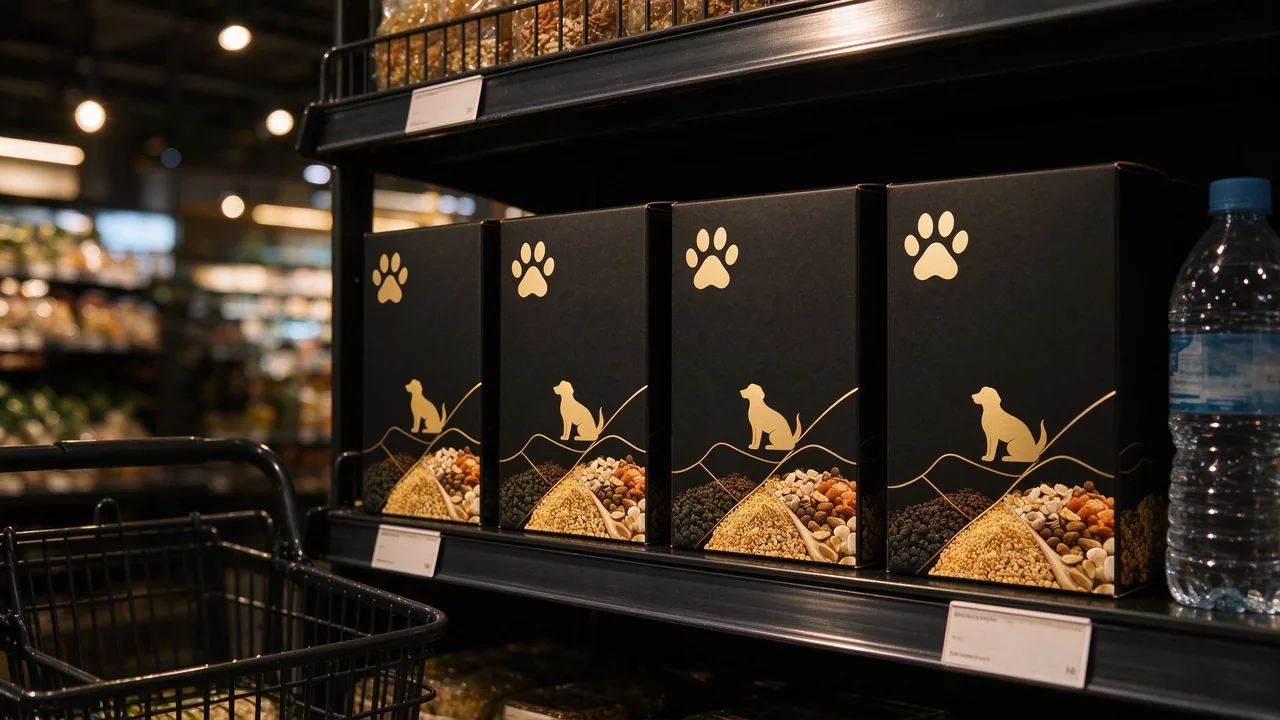
The lineup is worth reading item by item. EasyFresh dog food, which the brand describes as ambient human-grade, uses patented multilayer carton packaging that blocks light and oxygen, with small batches cooked gently and sealed immediately. Air-dried dog food is cooked low and slow for more than 16 hours at 175 degrees Fahrenheit. Dental sticks lean on a grooved shape and an added ingredient. EasyFresh comes in Pork and Spinach, Chicken and Kale, and Beef and Green Bean; the air-dried range covers Chicken and Sweet Potato, Salmon and Whitefish, and Turkey and Spinach. The brand says it has delivered more than 50 million meals and collected over 8,000 five-star reviews, with formulas developed alongside an on-staff, board-certified veterinary nutritionist.
One background number helps. A new Packaged Facts report finds e-commerce is now the largest US pet food channel, with 2026 US pet food sales projected at 57 billion dollars, up 4.3 percent, and more than half of US pet owners using AI to research pet care. In China, e-commerce accounts for about 60 percent of pet care sales as of 2025.
Both point the same way: fresh pet food no longer lives only in cold chain and subscriptions. It is moving onto grocery shelves. For co-packers, that means three new jobs.
1. Shelf life: from a few refrigerated days to several ambient months
Cold-chain fresh food buys shelf life with temperature. Ambient shelf life is built from water activity, barrier packaging and seal integrity together. Take the same formula into ambient packaging and the validation program changes entirely: temperature steps in accelerated testing, stability after opening, vibration and stacking during transport, and lipid oxidation across the shelf life.
What a co-packer must hand over is not a sentence about having made ambient products before. It is a validation report that lines up: batch, conditions, test items and conclusions. That report is worth far more to a brand negotiating with a retailer than a formula sheet.
2. Packaging and filling: a carton is not just a different shell
EasyFresh uses a multilayer carton that relies on material structure to block light and oxygen. Such packaging makes very specific demands on a plant: the filler must form the carton, the sealing temperature window is narrow, seal integrity needs inline inspection, and carton stiffness directly limits stack height.
A plant with only pouch lines will pay dearly to force a carton. Conversely, a high-barrier pouch with nitrogen flushing can reach a similar shelf target, with different display appeal and per-pack cost. Which route to take depends on what the channel needs, not on what the plant already owns.
3. Many flavors, small batches: the shelf wants three SKUs, the line must plan six
Retail entry usually starts with three to seven SKUs, and shelf space caps the order size for each. The result is smaller batches, more changeovers, and packaging minimums that hurt the most.
Plants that handle this kind of order do three things: share the bag or carton format and change only the print; combine different sizes of the same flavor into one run; and lock packaging early against a rolling forecast. Without those three, the quote will look bad.
4. Three reminders for brands
1. Choose the channel before the packaging. Grocery display and direct-to-consumer shipping ask different things of a pack.
2. Validate shelf life under worst-case conditions, not with a single ambient accelerated run.
3. Put the changeover cost of small multi-flavor runs into the contract, so the second order does not arrive with a price increase.
When taking on fresh pet food projects, Mixiaoqi pet food OEM/ODM lays out channel, packaging and shelf life on one page before discussing formula. In grocery retail, the outcome usually turns on packaging and validation rather than on the recipe.
FAQ
**Q1: What is the biggest co-packing difference between ambient and cold-chain fresh pet food?**
The shelf-life logic differs. Cold chain relies on temperature; ambient relies on water activity, barrier packaging and seal integrity. The validation work is different too, and cold-chain data cannot simply be reused.
**Q2: Can a plant with only pouch lines run ambient fresh pet food?**
Yes. High-barrier pouches with nitrogen flushing can reach comparable shelf targets, though display appeal and per-pack cost differ from cartons. Filling and sealing parameters must be validated again.
**Q3: Why does a three-flavor retail order cost more per unit?**
Because batches get smaller, changeovers multiply, and packaging minimums cannot be spread thin. Plants that share bag formats and combine production runs are the ones able to hold the price down.
Developing a fresh pet food product?
Share your target market, product direction, format and expected volume — we will help structure a project plan.
Submit a project brief