
# Freshpet Q3 Review: Chilled Fresh Pet Food Fridge Placement, Local Digital Fulfillment, DC Strategy
On November 6, 2026, U.S. chilled fresh pet food brand Freshpet (NASDAQ: FRPT) reported Q3 2026: net sales of $317.8 million, up 10% year over year; full-year sales growth guidance raised to 12%-13%. Beyond the numbers, the call shows a channel and cold-chain fulfillment model specific to chilled fresh food: fridge display, low-temperature movement, and local fulfillment of online orders through nearby stores. Based on the public earnings call, this article breaks down fridge placement, omni-channel fulfillment, distribution center arrangements, and logistics cost structure.
Key Figures (Public Disclosure)
- **Sales and growth**: Q3 net sales $317.8 million, up 10% YoY; growth mainly volume-driven; FY net sales guidance raised from 10%-12% to 12%-13%; adjusted EBITDA guidance raised to $215-$220 million.
- **Profitability**: adjusted gross margin 50.0% in Q3 versus 46.0% a year earlier, described as a seven-year high; improvement attributed to plant expense leverage, lower quality costs, lower input cost as a share of revenue, and a new bag technology.
- **Retail placement**: store count up 5% to over 31,000 stores; total distribution points up 14%, supported by larger and multi-fridge placements; about 25% of stores carry more than one fridge, expected to rise over time.
- **Digital channel**: digital sales up 35% YoY, representing 16.9% of the business; about 82% of digital orders fulfilled through the retail fridge network, including omni-retail and last-mile delivery; the rest from pure online retailers and direct-to-consumer.
- **Logistics cost**: adjusted logistics cost at 7.1% of sales versus 5.5% a year earlier; about one-third of the increase from fuel and two-thirds from linehaul costs.
- **Distribution center**: plans to move from a third-party DC in Allentown, Pennsylvania to a leased dedicated DC in Bethlehem, Pennsylvania in early 2027; the facility expands capacity, places distribution closer to the Bethlehem kitchen, and supports long-term efficiency and automation.
- **Pricing and cost**: inflation pressure emerging in beef, other ingredients, and packaging; selective 2027 price increases planned for categories with clear structural cost inflation or strong performance, taking a surgical approach to preserve volume growth.
Three Features of the Chilled Fresh Channel Model
1: Fridge Placement Is the Core Channel Asset
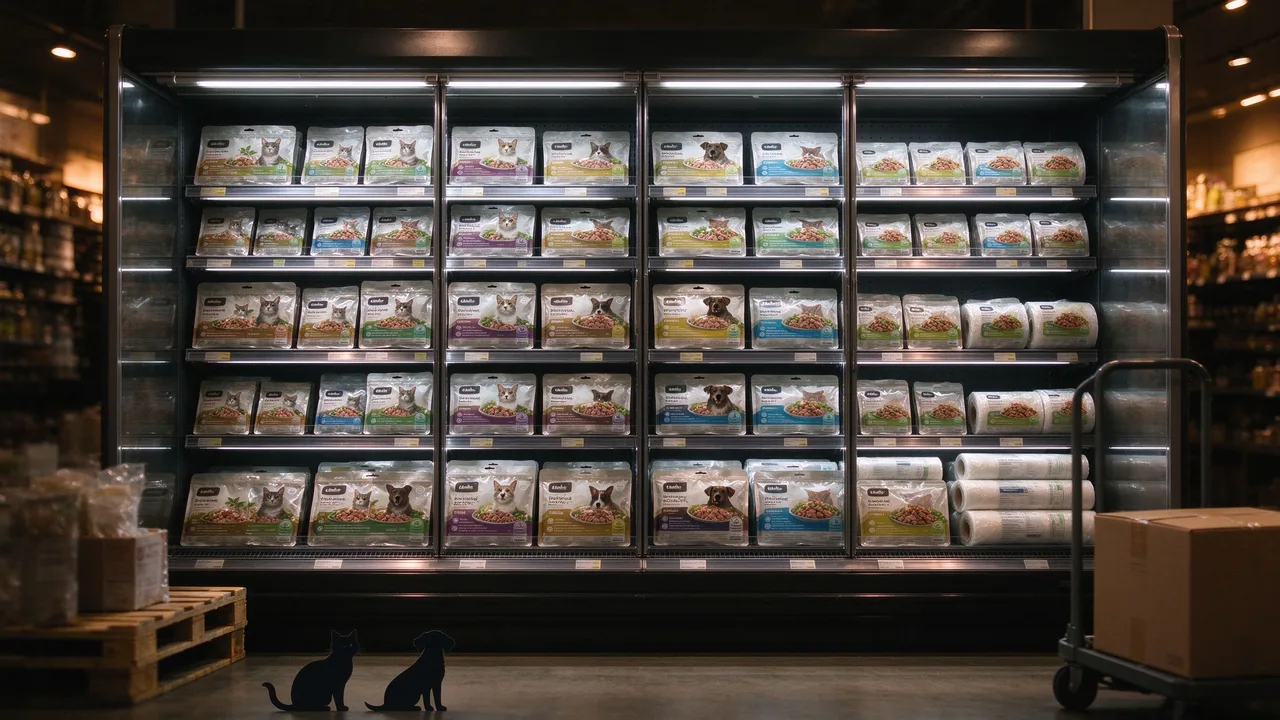
Shelf-stable kibble goes on ordinary racks; chilled fresh food needs cold cabinet space from retailers. Fridge count, per-store fridge number, and display area directly determine consumer reach. Rising multi-fridge store share shows channel expansion moving from "getting listed" to "expanding in-store display."
2: Digital Orders Fulfilled Locally Through the Offline Fridge Network
Fresh food is not suited to long-distance ambient shipping; digital orders more commonly ship nearby from retail fridges or forward-stock locations through omni-retail and last-mile delivery. Freshpet's roughly 82% digital fulfillment via the retail fridge network reflects an offline-network-as-fulfillment-node model rather than pure central-warehouse direct shipping.
3: DCs Handle Cold-Chain Transit Between Kitchen and Retail Fridges
Fresh food needs cold-chain transfer from kitchen to fridge. Moving from a third-party DC to a dedicated facility aims to shorten delivery distance and improve automation and long-term efficiency; as channel scale grows, fresh brands place higher value on DC controllability.
Why Logistics Cost Matters for the Fresh Category
- **Temperature requirements**: chilled products require controlled low-temperature movement throughout, with stricter warehousing and transport conditions than ambient food;
- **Timing and density**: fresh food turns quickly with scattered order batches; loading rate and linehaul cost directly affect per-box logistics expense;
- **Fuel and linehaul market**: logistics cost responds to fuel prices and linehaul capacity markets; the call attributed about two-thirds of the increase to linehaul;
- **DC model choice**: third-party DCs are flexible but less controllable; dedicated or owned DCs offer more capacity and automation space with higher upfront investment, to be weighed against channel scale.
Implications for Brands and Co-Packers Planning Fresh Lines
1. **Assess channel before locking process**: supermarket fridges, forward stock, or online subscription each drive different package specs, shelf life, cold-chain requirements, and batch MOQ;
2. **Small-batch trials match new-brand rhythm**: new brands usually test at a limited number of points first, so formula, packaging, and logistics must support small-batch, multi-round adjustment;
3. **Design packaging and shelf life together**: bag technology, barrier properties, and shelf life for chilled fresh food directly affect logistics turnover and loss;
4. **Calculate the full cost structure**: beyond ingredients and processing, include cold-chain warehousing, transport, loss, and fridge display support in the estimate;
5. **Keep pricing flexible**: under ingredient, packaging, and fuel swings, selective price adjustments preserve repurchase better than broad increases.
Concepts to Distinguish
- **Refrigerated fresh food**: chilled, shorter-shelf-life fresh meals, a different shelf format from ambient extruded kibble and freeze-dried treats;
- **Fresh D2C subscription**: subscription-delivery fresh model, whose fulfillment nodes differ from the retail-fridge omni-channel model;
- **Third-party DC vs dedicated DC**: the first relies on external warehousing resources; the second is leased or owned by the brand, with different capacity, automation, and controllability.
Bottom Line
Freshpet's Q3 shows a mature chilled fresh channel-cold-chain model: fridge placement expansion widens reach, offline nodes fulfill nearby digital orders, and DCs shift from third-party to dedicated as scale grows. For domestic brands planning fresh lines, channel format, cold-chain transit, and logistics cost must be designed alongside formula process and packaging shelf life; the OEM side supports small-batch trials, multi-spec packaging, and batch traceability.
Brands preparing chilled fresh or fresh-meal lines can work with **Mixiaoqi pet food OEM/ODM** in Guangzhou on fresh formula sampling, small-batch trial production, package spec and shelf-life evaluation, and batch traceability documentation.
---
FAQ
**Q: What is the biggest channel difference between chilled fresh food and ambient kibble?**
A: Chilled fresh food needs retailer cold cabinets and low-temperature movement; fridge placement is the core channel asset, while ambient kibble uses ordinary racks with different warehousing conditions.
**Q: How are fresh food online orders usually fulfilled?**
A: Common practice is local pickup from retail fridges or forward-stock locations with omni-retail and last-mile delivery; central-warehouse direct shipping depends on network density and cold-chain capability.
**Q: Why do fresh brands consider dedicated or owned DCs?**
A: At greater scale, a dedicated DC shortens delivery distance and improves automation and controllability; with higher upfront investment, the third-party versus dedicated choice depends on sales volume and network density.
Developing a fresh pet food product?
Share your target market, product direction, format and expected volume — we will help structure a project plan.
Submit a project brief