
# GCC Pet Food Labeling Guide: GSODS0000:2026 for Exporters
On September 8, 2026, the seven GCC countries (UAE, Bahrain, Kuwait, Oman, Qatar, Saudi Arabia, Yemen) published a WTO TBT notification on the draft "General Requirements for Pet Food" (GSODS0000:2026), covering pre-packaged pet food and feed general requirements and labeling. The comment period is closing — Chinese pet food exporters to the Middle East must pay attention.
What the New Rule Covers
GSODS0000:2026 is the GCC Standardization Organization's unified pet food general requirement, covering:
- Pre-packaged dog and cat food;
- General safety and hygiene;
- Ingredients and additives;
- Mandatory label content;
- Microbiological and contaminant limits.
A unified GCC standard means: complying with one country essentially covers the other six.
Mandatory Label Content
Per GSO labeling practice and the draft direction:
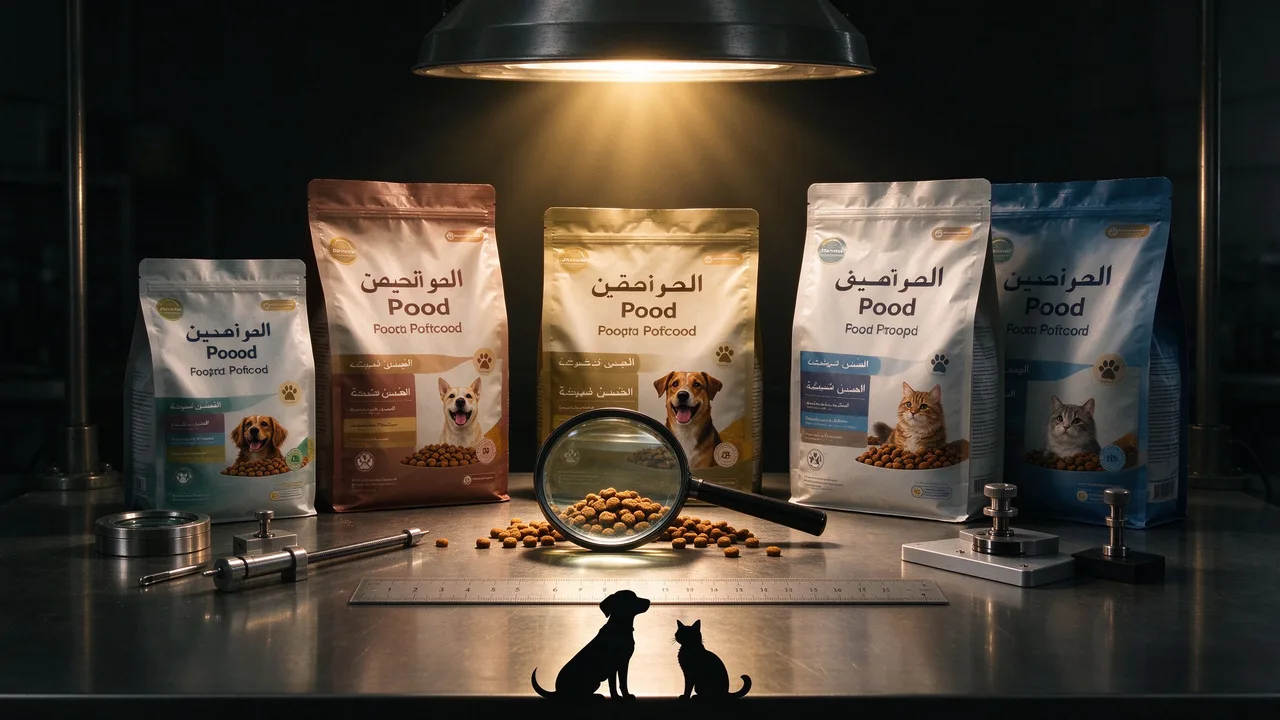
1. Arabic + English Bilingual
- Product name must be in Arabic;
- Ingredients, net weight, production date, shelf life must be Arabic;
- English may appear alongside, but Arabic is mandatory.
2. Metric Net Weight
- Grams (g) or kilograms (kg), not pounds;
- Net weight must be prominently displayed.
3. Country of Origin
- "Product of China" or "صنع في الصين" must be clearly marked;
- No vague "packaged in Gulf" wording to obscure origin.
4. Production and Shelf Life
- Production date (dd/mm/yyyy);
- Best before date (dd/mm/yyyy);
- Storage conditions (dry, cool, etc.).
5. Ingredients and Guaranteed Analysis
- Ingredients in descending weight order;
- Crude protein, crude fat, crude fiber, crude ash, moisture guarantees;
- "Grain-free" claims must meet GSO definition.
6. Halal Considerations
- Gulf markets prefer halal animal-derived ingredients;
- Halal claims require halal certification;
- Pork-derived ingredients (gelatin, flavorings) must be disclosed.
Ingredient and Additive Restrictions
GSO food code uses an EU-style positive list for pet food additives:
- Vitamins and minerals must be on the GSO permitted list;
- Preservatives and antioxidants have specified types and limits;
- GMO ingredients require labeling.
What Chinese Exporters Should Do Now
1. Confirm Target Market
While GCC standards are unified, individual countries add requirements:
- Saudi Arabia: SFDA registration;
- UAE: ESMA registration;
- Qatar, Kuwait: local importer endorsement.
2. Label Translation and Compliance Review
- Use professional Arabic translation (not machine translation directly on packaging);
- Have a GSO-accredited lab review the label;
- Confirm ingredient list and guaranteed analysis format meets GSO.
3. Testing Reports
- Microbiology (Salmonella, coliforms);
- Heavy metals (lead, arsenic, cadmium);
- Aflatoxins;
- Nutrient guarantees.
4. Pre-Launch Sample Testing
The draft comment period closes before final publication. Middle East exporters should now prototype and test to the draft, so they can switch quickly when the rule finalizes.
Middle East Market Opportunity
| Metric | Data |
|---|---|
| GCC pet market growth | 5-7% annually |
| Main import sources | Thailand, China, Europe |
| High-growth categories | Dry food, treats |
| Local production | Minimal, import-dependent |
The Gulf has low local capacity, strong purchasing power, and high import dependence — an emerging growth point for Chinese pet food exports.
Bottom Line
A unified GCC pet food standard is good news for Chinese exporters — one compliance covers seven markets. But Arabic labeling, Halal, and the GSO additive list are hard barriers to prepare now. Don't wait for final publication to change packaging, or you'll miss the Middle East growth window.
For brands developing GCC export packaging and formula compliance, **Mixiaoqi pet food OEM/ODM** in Guangzhou supports GCC label design, Arabic translation liaison, and export testing arrangements.
---
FAQ
**Q: Is the GCC standard in force?**
A: Currently a TBT draft; final after comment period. Prepare to draft requirements now.
**Q: Is Arabic labeling mandatory for Middle East exports?**
A: Yes — product name, ingredients, net weight, dates must be Arabic; English may accompany.
**Q: Is the Middle East an opportunity for Chinese pet food?**
A: Yes. Low local capacity, strong purchasing power, but must clear the GSO compliance bar.
Developing a fresh pet food product?
Share your target market, product direction, format and expected volume — we will help structure a project plan.
Submit a project brief