
The trend
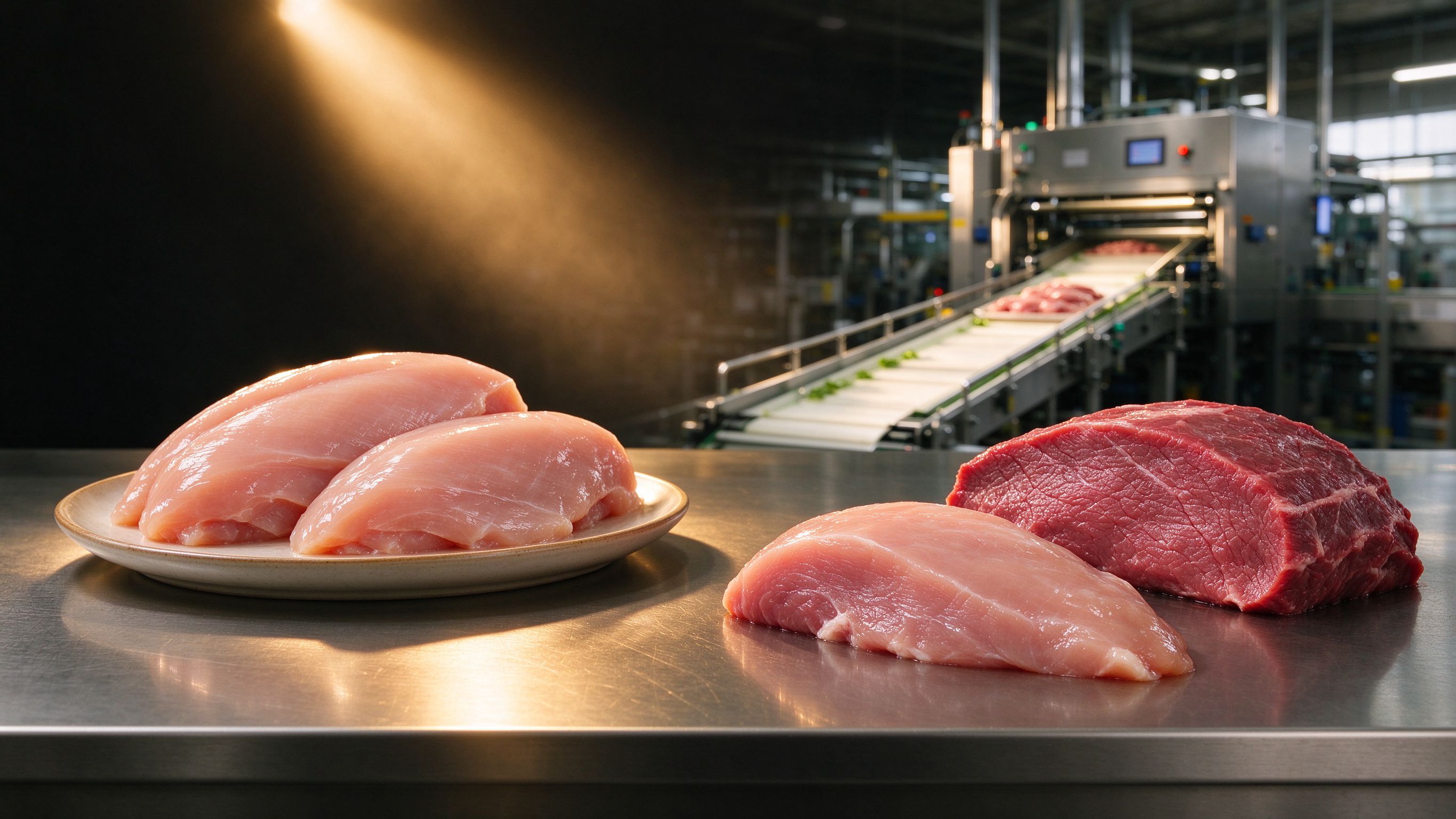
In the past two years, more livestock and poultry meat companies have moved into pet food. They have fresh meat, slaughter lines and cold chain—but pet food is not "turning leftovers into kibble." Formulation, extrusion or fresh-steaming, sterilization and shelf-life, palatability and long-term feeding consistency are a separate engineering stack. So many meat companies partner with dedicated pet-food manufacturers instead of building a plant from zero.
Check whether the fresh-meat source can close the loop
- Cold-chain distance from slaughter to input: the shorter and tighter the cold chain from carcass to mixing, the more controllable the freshness.
- Batch traceability: a single meat batch should map to a finished pet-food batch; only then can you honestly explain sourcing to channels and shoppers.
- Process fit: high fresh-meat formulas demand specific steaming, drying and water-activity control; the line must be designed for a fresh-meat system.
Advice for cross-industry brands
Don't just say "we have meat." Package fresh-meat source, cold-chain batches, process parameters and outgoing inspection into one verifiable chain, then pick a partner that can reproduce that chain consistently. Strong raw material is an advantage; stable engineering capability is what drives repurchase.
Project inquiry
Traceable fresh-meat pet-food manufacturing
We support high fresh-meat fresh-steamed kibble with batch traceability. Meat companies and brands are welcome to talk to us.
Developing a fresh pet food product?
Share your target market, product direction, format and expected volume — we will help structure a project plan.
Submit a project brief