
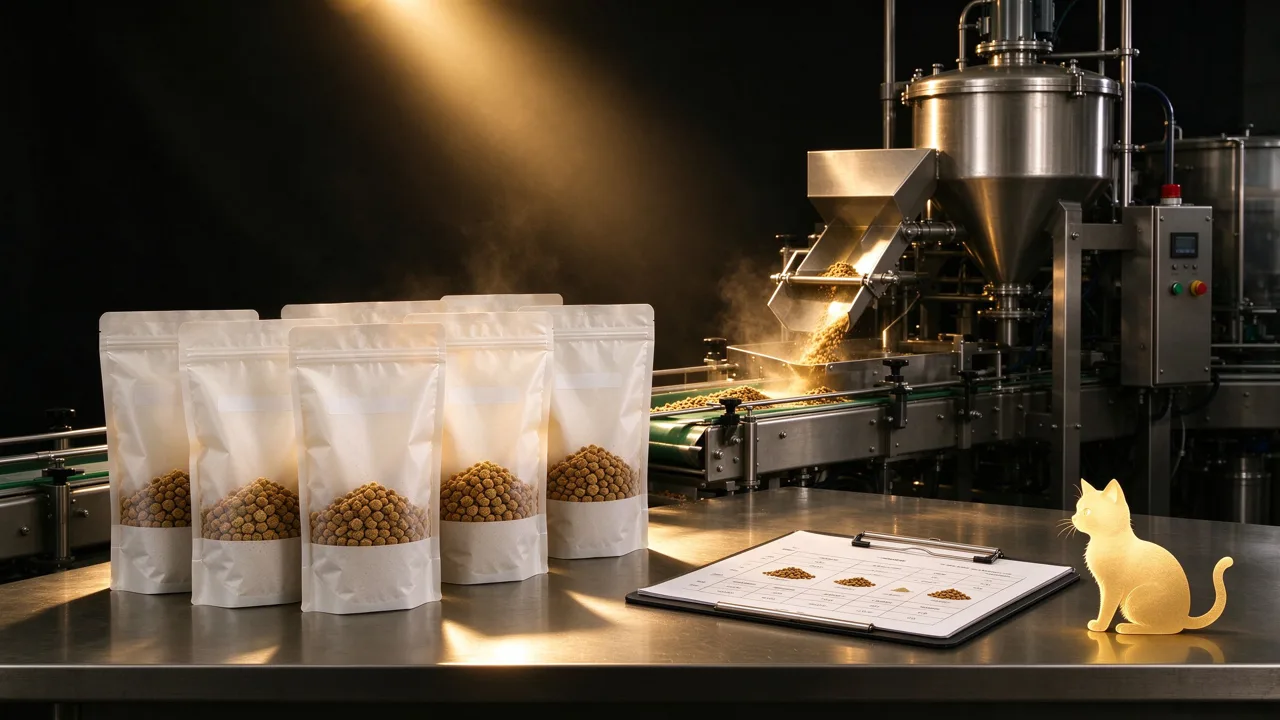
The most common mistake new brands make with their first contract manufacturer is **talking about mass production too early**. By the time the goods are made and money is committed, they discover the minimum run exceeds their estimate, and every formula tweak costs extra.
A healthy engagement follows three steps: **sampling, small trial run, then mass production**. Getting the rules for these three steps clear matters far more than squeezing the unit price.
Step 1: Sampling — settle three things first
- **Whether sampling is charged, and credited back**: a reputable factory charges a one-off sampling fee for ingredients and labor. Have it written into the contract that it is credited or refunded once bulk production is placed.
- **How many free revisions are included**: the first formula rarely lands on taste and texture straight away. Agree on "N rounds of adjustment included" so every tweak isn't billed separately.
- **Formula ownership**: confirm that once you approve a formula, the factory won't resell the exact same recipe and ingredient source to a direct competitor. This matters especially for fresh food.
Step 2: Small trial run on the real production line
Sampling happens in a lab pot. A trial run happens on the actual line.
- Run a batch on the **real filling machine and pack sizes**, even if the volume is small, to check fill weight, sealing and shelf behavior;
- keep **release tests and retained samples** from this batch as the benchmark for later mass production;
- ask the factory to report **waste rate and yield** from this batch, so the mass-production quote has real basis.
Step 3: Mass production — then negotiate MOQ and tiered pricing
The best MOQ is the one that matches your sell-through:
- set a **first pilot quantity** (enough to launch and cover the first repurchase cycle), then talk about volume-tier pricing;
- ask about **production scheduling**: how your priority is handled when many formulas compete for the line;
- agree on the **minimum reorder quantity and lead time**, so a stock-out doesn't mean a one-month wait.
Bottom line
On a first OEM engagement, **"cheaper unit price" is not the only standard**. How many sampling rounds are included, whether the trial runs on the real line, how re-formulation is priced, and the reorder lead time — written into the contract — matter far more than saving a few cents.
Frequently asked questions
What is a typical MOQ?
For fresh food on a flexible line, the first pilot run is usually far smaller than for extruded kibble; get a written number for your category and pack size.
Developing a fresh pet food product?
Share your target market, product direction, format and expected volume — we will help structure a project plan.
Submit a project brief