
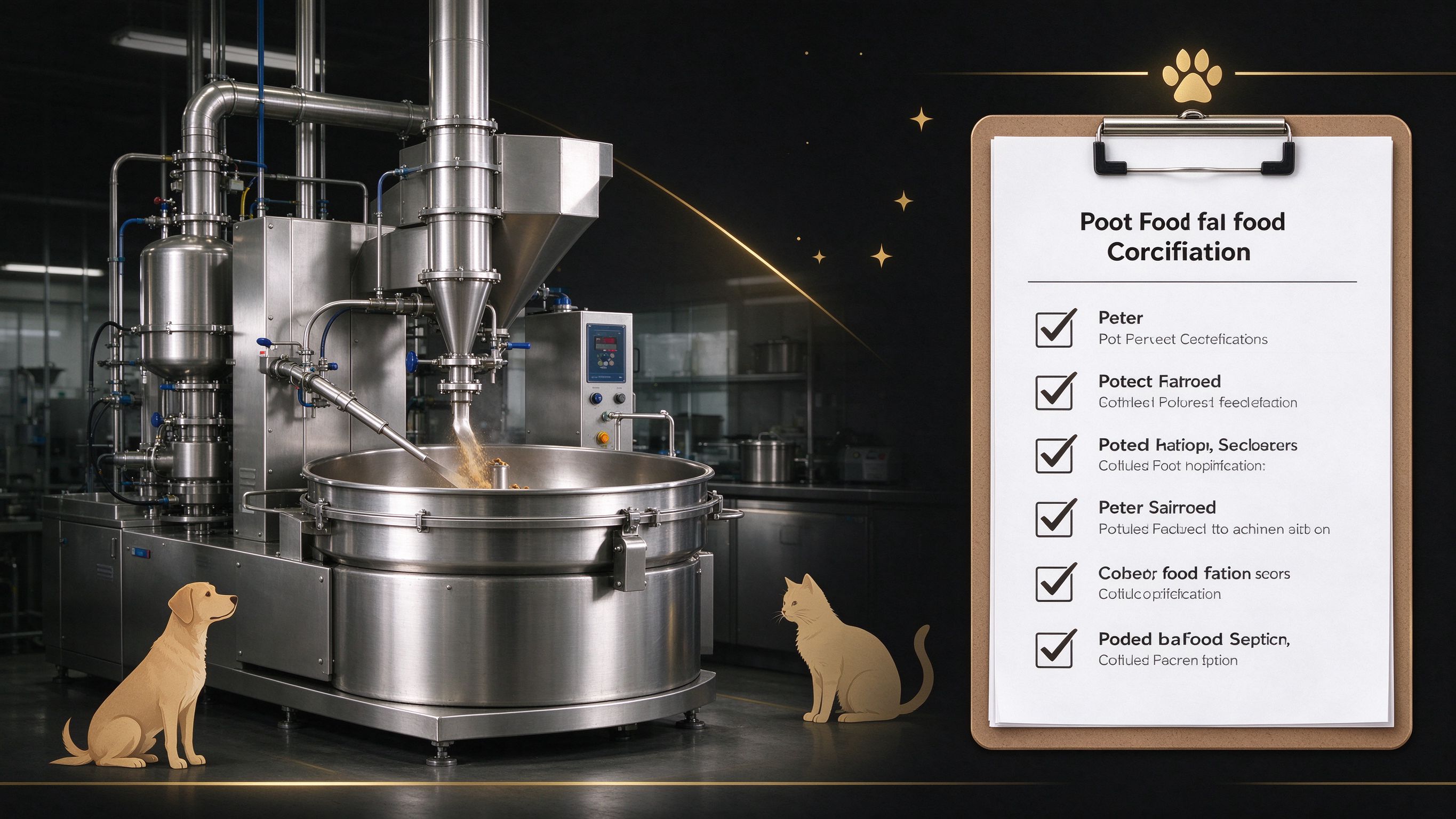
# Pet Food Co-Packer Certifications: What to Verify
When you first receive a contract manufacturer's qualification documents, it is easy to feel overwhelmed: BRCGS, ISO 22000, GMP, HACCP, FDA registration. Which ones actually matter?
Why certifications matter
Every bag your brand sells, the consumer comes to you—not the factory—if something goes wrong. Verifying the factory's certification system before signing is your first line of defense.
The core certification checklist
1. BRCGS (British Retail Consortium Global Standard)
One of the most recognized certifications in global pet food export. BRCGS covers product safety, factory environment, personnel, traceability, and supply chain management. If your product targets Europe or North America, BRCGS is essentially standard.
**How to verify**: Look up the factory name and certificate number on the BRCGS official website, checking validity and scope.
2. ISO 22000 (Food Safety Management System)
An internationally recognized food safety management standard covering everything from raw material procurement to finished product release. ISO 22000 typically signals standardized documentation and traceability.
3. GMP (Good Manufacturing Practice)
GMP covers personnel hygiene, facility standards, equipment maintenance, and production records. Domestic pet food factories must pass GMP inspection to legally produce.
4. HACCP (Hazard Analysis Critical Control Points)
HACCP is not just a certificate—it is a preventive food safety methodology. A quality co-packer should embed HACCP into daily production, with clear monitoring records at critical control points (temperature, metal detection).
5. Export registrations
For export markets, confirm:
- **China customs export food manufacturer registration**
- **Destination market registration** (FDA registration for the US, EU registration for Europe)
Which certifications are mandatory?
| Certification | Domestic Sales | Export to US/EU |
|--------------|---------------|----------------|
| GMP / SC license | Required | Required |
| HACCP system | Strongly recommended | Required |
| ISO 22000 | Plus | Recommended |
| BRCGS | Plus | Strongly recommended |
| FDA / EU registration | Not needed | Required |
What to check during a factory audit
1. **Ask to see original certificates**, not just copies
2. **Verify the scope**: some factories hold certification for only one line
3. **Review the latest audit report** for non-conformities and corrective actions
4. **Observe on-site**: workshop cleanliness, personnel attire, material segregation—these tell the real story
If you are looking for a fully certified pet food co-packer that also supports small-batch fresh and freeze-dried production, Mixiaoqi pet food OEM/ODM welcomes factory audits and provides complete certification documentation.
FAQ
**Is ISO 22000 sufficient?**
For domestic sales, basically yes. For export or premium channels, BRCGS carries more weight.
**How do I verify a certificate is real?**
Every certification body has an official lookup portal. Enter the factory name and certificate number.
**Is an SC license mandatory for domestic co-packing?**
Yes. SC production licensing is the legal threshold for food manufacturing in China.
Frequently asked questions
宠物食品代工需要什么认证?
国内销售需SC+GMP,出口需BRCGS+目标市场注册。BRCGS和ISO22000哪个更重要?
Developing a fresh pet food product?
Share your target market, product direction, format and expected volume — we will help structure a project plan.
Submit a project brief