
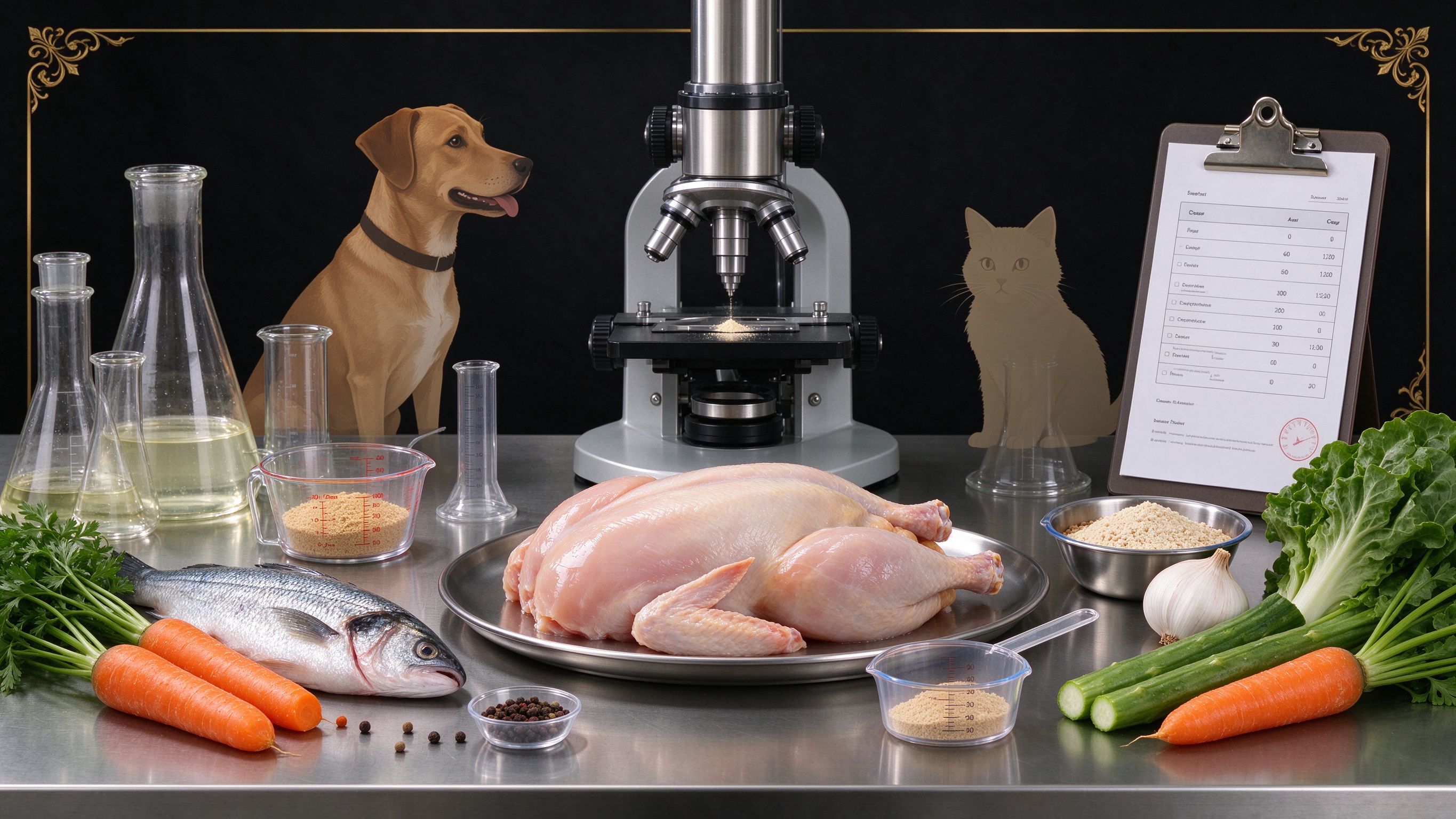
# Pet Food Formulation: OEM vs ODM
One of the first questions new brands ask: should I provide my own recipe, or does the factory develop one? This is the core difference between OEM and ODM.
OEM: You provide the recipe
OEM (Original Equipment Manufacturing) means **you supply the formula, ingredient standards, and process requirements; the factory manufactures to your spec.**
Best for:
- Brands with existing formulations or licensed recipes
- Brands with an in-house pet nutritionist or formulator
- Brands seeking high differentiation
What you prepare:
1. Complete formula sheet (ingredient ratios, nutrient targets)
2. Ingredient specifications (protein/fat percentages, sourcing)
3. Packaging and label content
4. Finished product acceptance standards (nutrient and microbial limits)
Cost profile:
- Lower MOQ (no R&D cost absorbed by factory)
- Fixed processing fee per batch
- All formula development costs borne by the brand upfront
ODM: Factory provides the recipe
ODM (Original Design Manufacturing) means **you state your product positioning; the factory matches or develops a formula from its existing library. You select and private-label it.**
Best for:
- New brands without R&D capability
- Brands wanting fast time-to-market
- Brands validating market fit before investing in differentiation
What you prepare:
1. Product positioning (cat/dog, life stage, price tier)
2. Key selling points (fresh meat, grain-free, limited ingredient)
3. Target nutrient ranges
4. Packaging and brand design
Cost profile:
- Low upfront investment (existing formula library)
- Fast sampling (often 2-3 weeks)
- Formula may be shared with other clients
- Factory may charge formula development or sampling fees
Side by side
| Dimension | OEM (Your Recipe) | ODM (Factory Recipe) |
|-----------|-------------------|---------------------|
| Time to market | Slow (3-6 months) | Fast (2-4 weeks sampling) |
| Upfront cost | High (R&D) | Low |
| Differentiation | High | Low to medium |
| MOQ | Lower | May be slightly higher |
| Best stage | Mature brand | New brand validation |
Hybrid approach
Many mature brands use both:
- **Staple SKUs**: factory ODM formulas for fast market coverage
- **Hero SKUs**: proprietary OEM formulas to build moats
- **Co-branded SKUs**: joint development with the factory
Which should you choose?
Ask yourself:
1. Do you have pet nutrition or food science background? No → start with ODM
2. Can you tolerate a 3+ month formula development cycle? No → start with ODM
3. Do you have an exclusive formula or patent? No → ODM first, develop proprietary formulas later
If you are a new brand testing the market, Mixiaoqi pet food OEM/ODM offers ODM formula libraries for fast sampling, and can co-develop proprietary formulas as your brand grows.
FAQ
**Will ODM formulas overlap with other brands?**
Base formulas may be similar, but ingredient grades, meat content, and packaging differentiate the end product.
**How much does OEM formula development cost?**
For simple extruded food, typically $3,000-8,000; fresh food or freeze-dried formulas cost more.
**Can I switch from ODM to OEM later?**
Yes. Many brands start with factory formulas and develop proprietary recipes once the market is validated.
Frequently asked questions
OEM和ODM配方区别?
OEM品牌方出配方,ODM工厂提供配方。ODM配方会撞车吗?
Developing a fresh pet food product?
Share your target market, product direction, format and expected volume — we will help structure a project plan.
Submit a project brief