
# Pet Food Price War: Choosing the Right Co-Packer
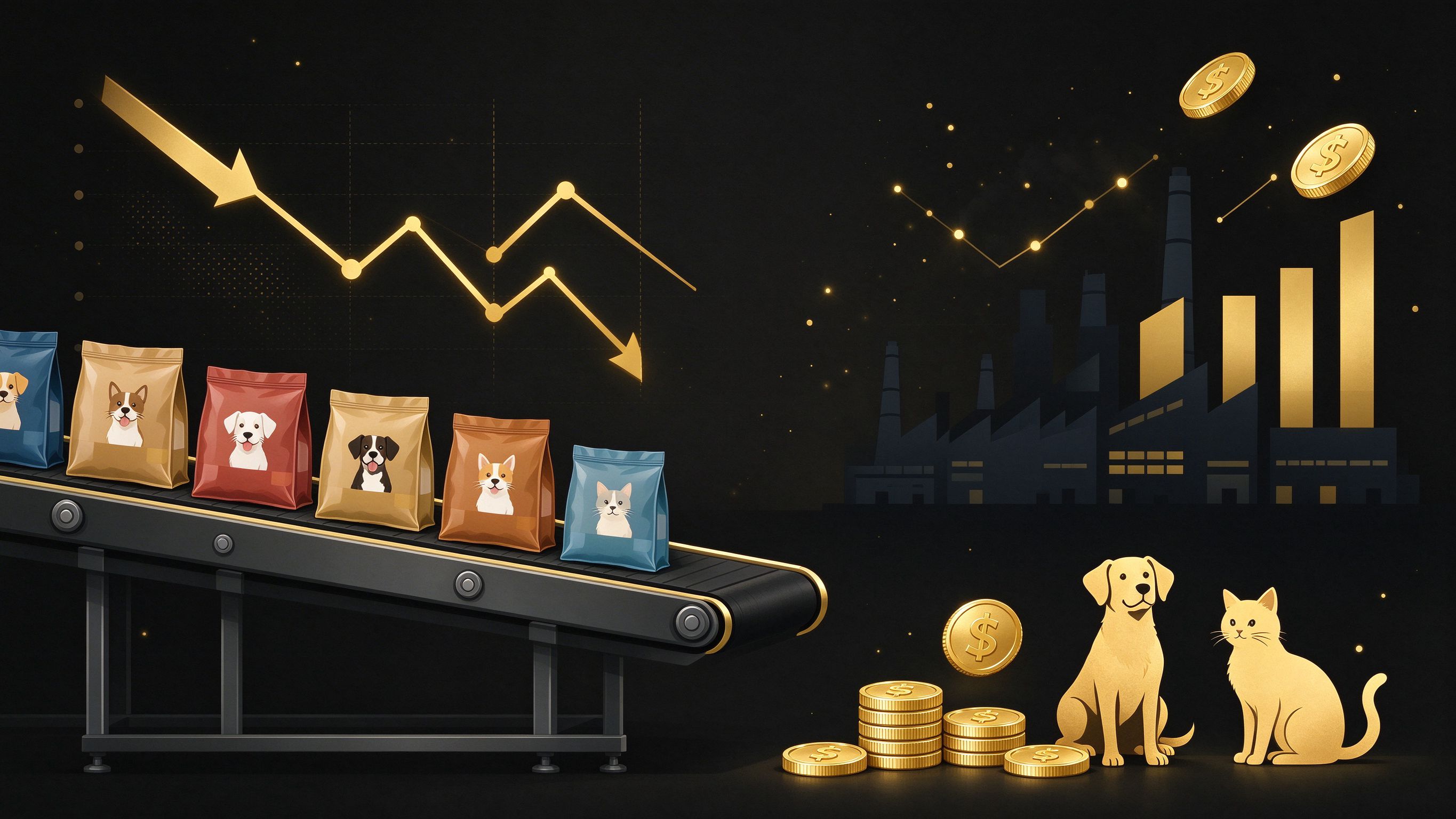
Guaibao Pet Food reported Q3 results: revenue up 8% but net profit down 58%, with quarterly profit dropping 83%. The industry is in a price war.
Why are profits dropping?
1. High raw material costs
2. Price competition from leading brands
3. Rising marketing costs
4. Tariff and freight volatility
What this means for small brands
1. Don't just chase the lowest price
Compare:
- Ingredient quality at the same price point
- Test report completeness
- Sampling speed
- After-sales support
2. Find flexible co-packers
Big factories have high MOQs. Small brands should look for:
- MOQ from 500-1,000 kg
- Split production runs
- Flexible sampling
3. Look at the co-packer's cost control
- Own ingredient sourcing
- Automation level
- Defect rate
- In-house formulation library
4. Long-term beats price negotiation
A stable co-packer saves more than squeezing the quote each time.
How brands survive the price war
1. Don't cut prices blindly
2. Differentiate: fresh food, baked, functional
3. Keep SKU count lean
4. Pick the right co-packer — manufacturing is 30-50% of product cost
Common mistakes
1. Going with the cheapest factory
2. Sampling with multiple factories at once
3. Not signing long-term agreements
4. Ignoring logistics costs
If you're looking for a co-packer that balances cost and quality in a price war, Mixiaoqi pet food OEM/ODM focuses on flexible small-batch production starting at 500kg for fresh and baked food.
FAQ
Should I squeeze the co-packer's price?
Negotiate, but not so hard that quality drops.
Big factory or small factory?
Start with a flexible mid-sized factory for small batches.
What is a reasonable manufacturing cost share?
30-40% for fresh food, 40-50% for dry food.
Frequently asked questions
价格战要压代工厂价吗?
可以谈但别太狠。小品牌选大厂还是小厂?
Developing a fresh pet food product?
Share your target market, product direction, format and expected volume — we will help structure a project plan.
Submit a project brief