
# Pet Food Label Changes: Korea's Two-Year Clock and the Multi-Market Label Problem
On November 19, the Korea Pet Food Association held its third Global Pet Food & Nutrition Forum at KINTEX in Ilsan, drawing about 200 industry attendees and speakers from Korea, the United States, China, Thailand, Vietnam and Indonesia. Korean trade press reported the sessions on November 21, and two details matter more than the headline: Korea's separate labeling standard for complete pet food is roughly two years from taking effect, and the U.S. Pet Food Label Modernization (PFLM) effort has moved from a 2015 discussion toward a 2030 start, with AAFCO advisors recommending up to six years for industry to prepare and comply. For exporters, pet food label changes now have a schedule.
For anyone who ships private label product across borders, this is not a foreign policy story. **Pet food label changes are a scheduling problem, not a design task.** One label often has to serve several markets, and the regulation date is only the finish line.
Three clocks, and the shortest one is not the whole story
- **Korea:** the complete-feed labeling standard is about two years out by industry count, with the final text and transition period still to be published. It points to rules built around complete versus complementary positioning, rather than the general feed label.
- **United States:** PFLM began as a discussion in 2015 and is scheduled for 2030, roughly a fifteen-year arc. Pam Kaufman, an industry advisor to the AAFCO pet food committee, told the forum that regulators should give companies up to six years to prepare and comply.
- **Factory reality:** print cylinders, packaging minimum order quantities, batches already on the water, and old-version stock. These usually bind earlier than the regulation does.
Fifteen years sounds generous and six years sounds comfortable, but once packaging lead times are layered in, the window for actually rewriting copy is often a few months. In our projects, **copy freeze sits 12 to 18 months before the effective date**. That is a planning rule of thumb, not a legal requirement.
Pet food label changes: where multi-market labels collide
Seven points cause most of the rework:
1. **Language and bilingual order:** some markets require the local language first; others require equal prominence side by side.
2. **Ingredient naming and order:** the same raw material has different legal names in different markets, and moisture or splitting rules can change the ranking.
3. **Guaranteed analysis format:** units, as-fed versus dry matter basis, and the number of required items all differ.
4. **Health claims and substantiation:** what may be said, how far it can go, and what evidence must be kept on file vary the most.
5. **Net content and units:** grams versus ounces, milliliters versus fluid ounces, plus type-size rules.
6. **Country of origin, registration numbers and manufacturer details:** the export registration holder is not always the entity named on the label.
7. **Principal and manufacturer identification:** for private label, does the label carry one responsible party or two?
None of this is solved by redesigning one artwork file. It needs a **label register**: SKU by market by version by effective date by remaining packaging by in-transit batches by supporting test reports. The register is not document control; it drives production sequencing and whether old film can be consumed.
Align the definition of complete feed first
The Korean standard is fundamentally about making complete versus complementary clear. The direct consequence for a co-packer: the nutritional positioning used in formula design has to match the positioning printed on the label. One formula cannot be sold as complete in one market and complementary in another without two sets of nutritional substantiation and two labels, not two sets of copy.
Settling this early avoids the most expensive kind of rework: packaging printed, containers landed, and the positioning questioned.
What the co-packer can do, and what it cannot
Three things a factory can own:
- **Translate formula data into each market's format:** guaranteed analysis, unit basis, test panels and report conventions.
- **Provide a process and ingredient evidence pack:** supplier specifications, batch test reports, key process parameters that support label wording.
- **Freeze versions and approve proofs:** first-article sign-off, color tolerance, and a plan to consume old packaging.
Two things it cannot own:
- **Substantiation of health claims.** The brand decides what is said and why.
- **Destination-market registration.** Who applies, who holds, and who amends belongs in the contract.
Blurring these into a turnkey co-packing package is exactly how finger-pointing starts.
Do not sell crude protein as a promise
In the same forum, Dr. Júlia Guazzelli Pezzali of Kansas State University's pet food program made a point that lands directly on labels: a higher crude protein percentage does not guarantee nutritional quality. Even with identical ingredients, processing method, particle size, pH and ingredient composition change how well amino acids are actually used. The field is using amino acid score, PER and DIAAS as complements.
The label implication is simple: **put the protein number on the front panel only after the test and the rationale exist.** The number can be printed; it just should not read like a promise.
Dr. Aleksan Shanoyan, also of Kansas State, added market context: U.S. pet food volume fell 0.3% from 2020 to 2025 while value rose 70.2%. Growth came from price and positioning, and the label is the first layer of that positioning. That is why every regulatory shift makes brand owners nervous.
A label-change schedule for co-packing projects (suggested, not regulatory)
- **T-18 months:** freeze label copy, nutrient basis and claim list for each market
- **T-12 months:** complete the regulatory cross-check and sign off proofs
- **T-9 months:** place packaging orders, working backward from print minimums and ocean transit
- **T-6 months:** trial print and shelf simulation; confirm type size and color
- **T-3 months:** consume old-version stock and fix the switchover batch
- **T-0:** new label effective; first-batch samples and reports archived
The value of the table is not precision. It is connecting design, printing, clearance and shelf in one line. Projects rarely die because copy was late; they die because the cylinder queue was full or the old film never ran out.
FAQ
**Q1: What is the first step in pet food label changes?**
Build the register, not the artwork. List SKU, market, version, effective date and remaining packaging before deciding what to change first.
**Q2: Can the two-year Korean timeline be treated as a grace period?**
No. It is a countdown to implementation, not a commitment of preparation time. Rewriting packaging after the text lands is usually too late.
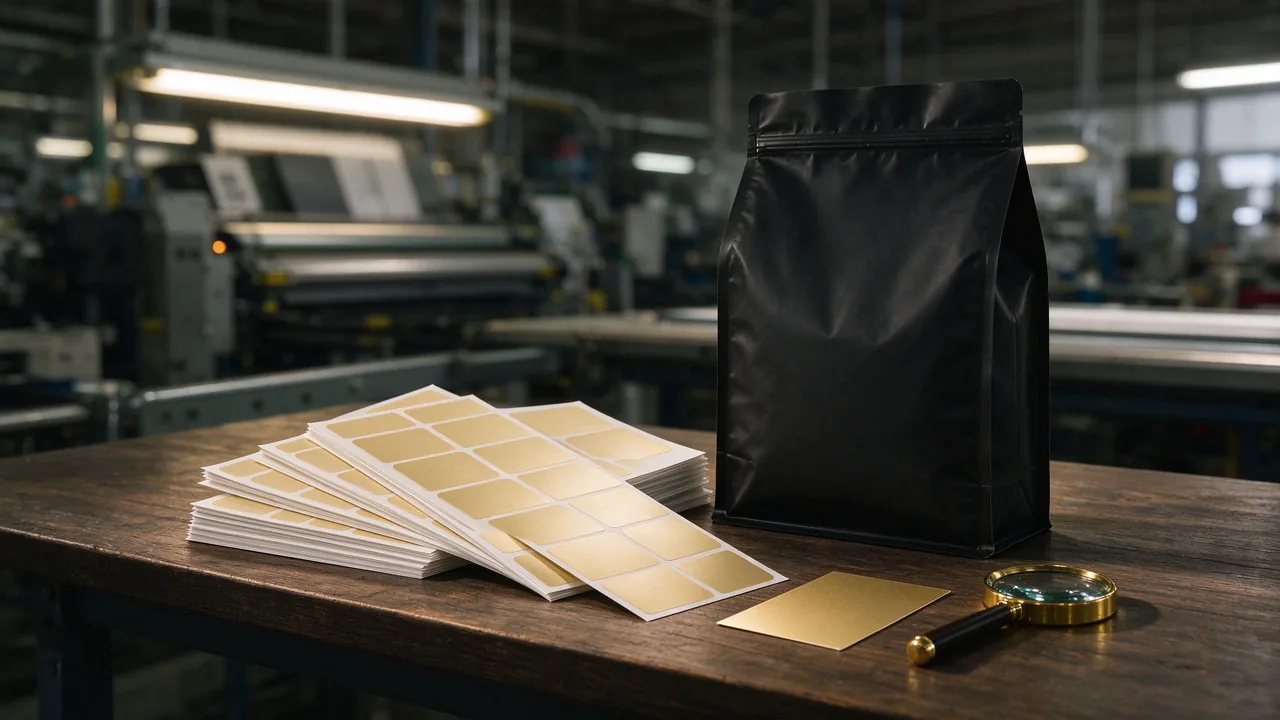
**Q3: Can one label serve several markets with stickers?**
For small volumes it can work, but confirm that sticker placement, type size and traceability are accepted in the destination market, and note that stickering adds a quality step of its own.
**Q4: Should the co-packer review health claims for the brand?**
It can flag risk but does not carry the substantiation duty. Write into the contract that the brand approves copy and holds the evidence.
Pet food label changes save money in old packaging and rejected batches, not in design fees. In Mixiaoqi pet food OEM/ODM export projects, the label register and the formula version are frozen together, because once those two documents drift apart, every later step has to be redone.
Developing a fresh pet food product?
Share your target market, product direction, format and expected volume — we will help structure a project plan.
Submit a project brief