
# Before You Talk to a Pet Food Co-Packer, Prepare These Eight Items
The same sentence, "I want to launch a cat food," produces a two-round sample process for one brand and a fifth revision for another. The difference is usually not plant capability. It is the brief written before work starts.
A vague brief forces the plant to guess, and one wrong guess costs a sampling round. Behind each round sit ingredients, machine time, testing and shipping, which adds up quickly.
1. Eight items to prepare
**1. Target nutrition**: minimum or range requirements for crude protein, crude fat, ash, moisture and the calcium to phosphorus ratio. "High protein" means nothing. "Crude protein not below 36%" means something.
**2. Format and process**: extruded kibble, baked kibble, freeze-dried, air-dried, wet pouches, or blends. Format determines the line and the minimum order quantity.
**3. Ingredient white and black lists**: what must be used, such as fresh chicken or salmon; what cannot be used, such as certain grains or additives; and whether grain-free or single-protein is required.
**4. Cost band and quote basis**: a ceiling on landed cost per kilogram of finished product, and whether quotes are based on processing fee or finished goods. Comparing quotes on different bases is meaningless.
**5. Packaging format**: bag type, fill weight, clear window, nitrogen flushing, carton specification. Packaging fit with the line drives efficiency and waste.
**6. Claims and compliance boundaries**: the selling points planned for the pack, which have a basis and which do not. Showing the plant what you intend to say is cheaper than a redesign after launch.
**7. Target market and certifications**: domestic or export, which country, whether specific certification or registration is needed. The market defines formula and labeling rules.
**8. Volume and cadence**: first run quantity, annual estimate, replenishment frequency. A first run alone tells the plant nothing about whether to reserve a line for you.
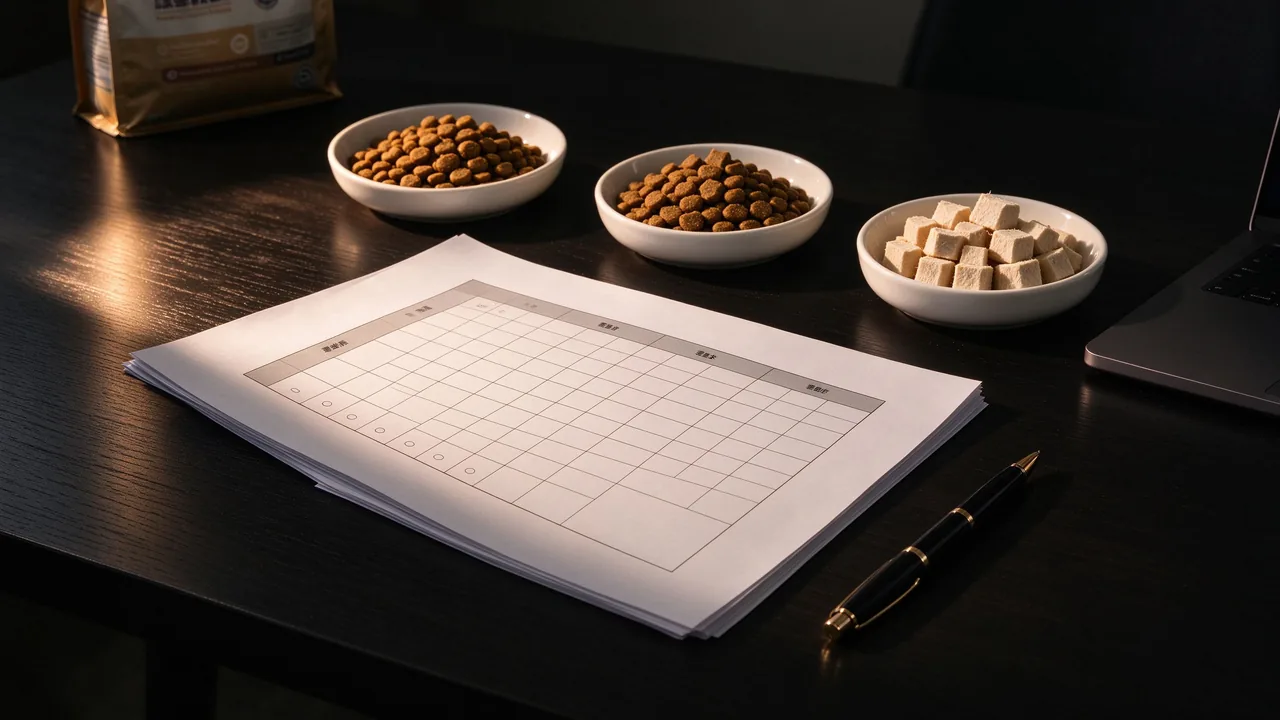
2. Fields of a one-page brief
| Field | What to fill in |
| --- | --- |
| Positioning | Target owner, price band, competing SKUs |
| Nutrition | Protein, fat, ash, moisture, Ca:P; mark minimum or range |
| Format | Extruded, baked, freeze-dried, wet, blend |
| Ingredients | Required, excluded, grain-free, single protein |
| Cost ceiling | Cost per kg finished, packaging included or not |
| Packaging | Bag type, fill weight, nitrogen, carton |
| Claims | Three statements planned for the pack |
| Market | Domestic or export country, certification needs |
| Volume | First run, annual estimate, replenishment cadence |
| Attachments | Competitor samples, reference formula, die line, label draft |
3. Three costs a vague brief creates
1. Extra sampling rounds: each round consumes ingredients, machine time and shipping, and changes the formula while burning calendar time.
2. Packaging scrap: the wrong fill weight or bag type turns printed film into waste.
3. Delayed launch: label revisions plus formula rework can push the brand past a whole selling season.
4. The right order for a first conversation
Send the brief first, then ask about capacity and minimum order, and discuss price last. Reverse that order and the plant can only quote "roughly feasible," with everything after that becoming a change order.
A first meeting should settle three things: whether the line can run this format, whether the cost band is feasible, and whether the first volume matches the lead time. Only after those three should the conversation move to formulation detail.
When Mixiaoqi pet food OEM/ODM takes a new client, the brief comes first, then a feasibility read: which targets are achievable as stated, which need adjustment, and which cost levels will not work. Setting boundaries upfront is worth more than quoting a low price.
FAQ
**Q1: Can I approach a co-packer without a formula?**
Yes. The plant can develop a formula from your target nutrition, cost band and ingredient preferences, but those conditions have to be stated. Saying only that you want a premium cat food leaves the plant guessing.
**Q2: How many sampling rounds are normal?**
With clear conditions, usually two to three: direction in round one, taste and appearance in round two, production parameters in round three. More than three usually means one item in the brief was never defined.
**Q3: Can the brief change after it is written?**
Yes, but the later the change, the higher the cost. Once ingredients, packaging and labels are ordered, a change means rework. Resolve changes during sampling.
Developing a fresh pet food product?
Share your target market, product direction, format and expected volume — we will help structure a project plan.
Submit a project brief