
# Running a Co-Packer's Finished Goods Warehouse: Batches, Locations, FIFO and Shipping
The finished goods warehouse is the most overlooked stretch of a co-packing project. However disciplined production is, intake without batch control, unmarked locations and shipping from memory leave tracing to guesswork the moment a complaint arrives.
Here is the warehouse in seven parts, each with one executable action.
1. Intake: confirm three things
- **Batch number**, mapped one-to-one with production records and retained samples, never two numbers for one batch.
- **Release status**: goods that have not passed testing stay out of the saleable area, physically separated to prevent mis-shipment.
- **Quantity and appearance**: carton count, pack configuration, seals and label version checked on the spot, with exceptions logged.
An intake sheet needs three fields without exception: batch, quantity, release conclusion.
2. Locations: let position remember for you
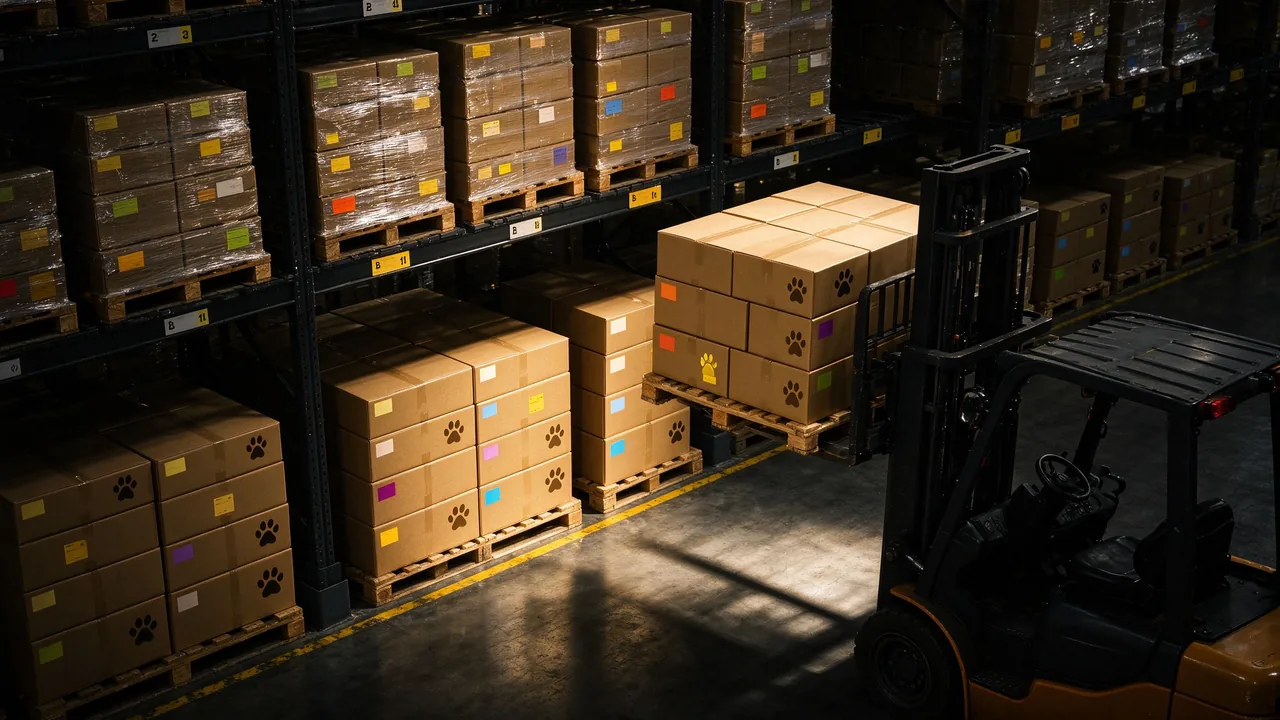
A four-part location code, area, row, level and slot, paired with color coding:
- different batches of one SKU stored in separate zones;
- month markers in different colors, so sequence is visible at a glance;
- quarantine, returns and scrap each in their own area, never mixed with saleable stock.
Locations are not the warehouse's private business. They set picking speed and mis-shipment rate.
3. FIFO and near-expiry control
FIFO runs on rules, not memory:
- pick only from the oldest batch, guided by the system or a board;
- set a remaining-shelf-life alert, for example triggering below one third, and act before expiry rather than at it;
- review batch age monthly and list slow-moving SKUs separately.
Near-expiry handling needs a defined path: internal transfer first, channel promotion second, disposal last, each with an approval record.
4. Stacking and environment
- Keep goods off the floor and away from walls; pallets do not sit directly on concrete.
- Cap stack height per carton specification so lower layers do not deform.
- Log temperature and humidity, especially for higher-fat or fresh-ingredient products.
- Store away from light to limit packaging fade and flavor change.
5. Dispatch: pick and verify
Three failures dominate dispatch: wrong batch, mixed batches on one truck, wrong label version.
Three matching actions:
1. **Separate picking from verification**, with a scan confirming batch and quantity.
2. **No mixed batches**: one pallet carries one batch, and any mixing is relabeled and logged.
3. **Load sequence**: last off first on, heavy goods low, so a second handling at arrival does not add damage.
6. Drop-shipping versus pallets
- **Pallet shipping** costs less per unit and moves fast, suited to steady channel volume.
- **Drop-shipping** costs more per unit but lowers inventory pressure, suited to market testing and direct-to-consumer.
- **The difference** sits in picking and packing labor, materials and damage rate. Drop-shipping usually damages more, so packaging needs to be stronger.
Choose by order structure, not by warehouse preference.
7. Reconciliation and traceability
- Count monthly, and categorize variances as missed entries, mis-shipments, damage or returns not received.
- Every batch must be traceable to a destination: who received it, when, how many units.
- When a complaint arrives, a batch number must lead back to production records, ingredient batches and retained samples within one day.
8. What the agreement should say
If warehousing and dispatch sit with the co-packer, the agreement should cover location and batch responsibilities, near-expiry rules, a damage-rate ceiling, stocktake frequency and how variances are compensated.
Mixiaoqi pet food OEM/ODM runs the warehouse on three basics: batch, location and color code. Intake creates the record, picking follows the oldest batch, and dispatch is scanned and verified. If a customer asks where a batch went, one batch number answers it.
FAQ
**Q1: What must be confirmed first at finished goods intake?**
Batch number and release status. Goods without release do not enter the saleable area, and the batch number must map to production records and retained samples.
**Q2: How do you actually enforce FIFO?**
Through locations and markings, not memory. Split a SKU by production date, mark months with color codes, and pick only from the oldest batch.
**Q3: Where does the cost difference between drop-shipping and pallet shipping come from?**
Picking and packing labor, materials and damage rates. Drop-shipping costs more per unit but lowers inventory pressure, while pallets cost less but need steady volume.
Developing a fresh pet food product?
Share your target market, product direction, format and expected volume — we will help structure a project plan.
Submit a project brief