
# Pre-Production Pet Food Palatability Testing: Two-Bowl Preference, One-Bowl Acceptability, Co-Packer Workflow
Meeting nutritional targets does not mean an animal will eat the food. Palatability refers to acceptance and preference for a food, and it must be validated before mass production. Palatability issues are typically traced to formula, ingredient composition, pellet texture, or flavor coating, requiring standardized methods to quantify observations and feed results back into formula and process adjustments. This guide covers common palatability methods, reference judgment ranges, influencing factors, and the pre-production testing workflow between brand and co-packer.
Two Basic Evaluation Methods
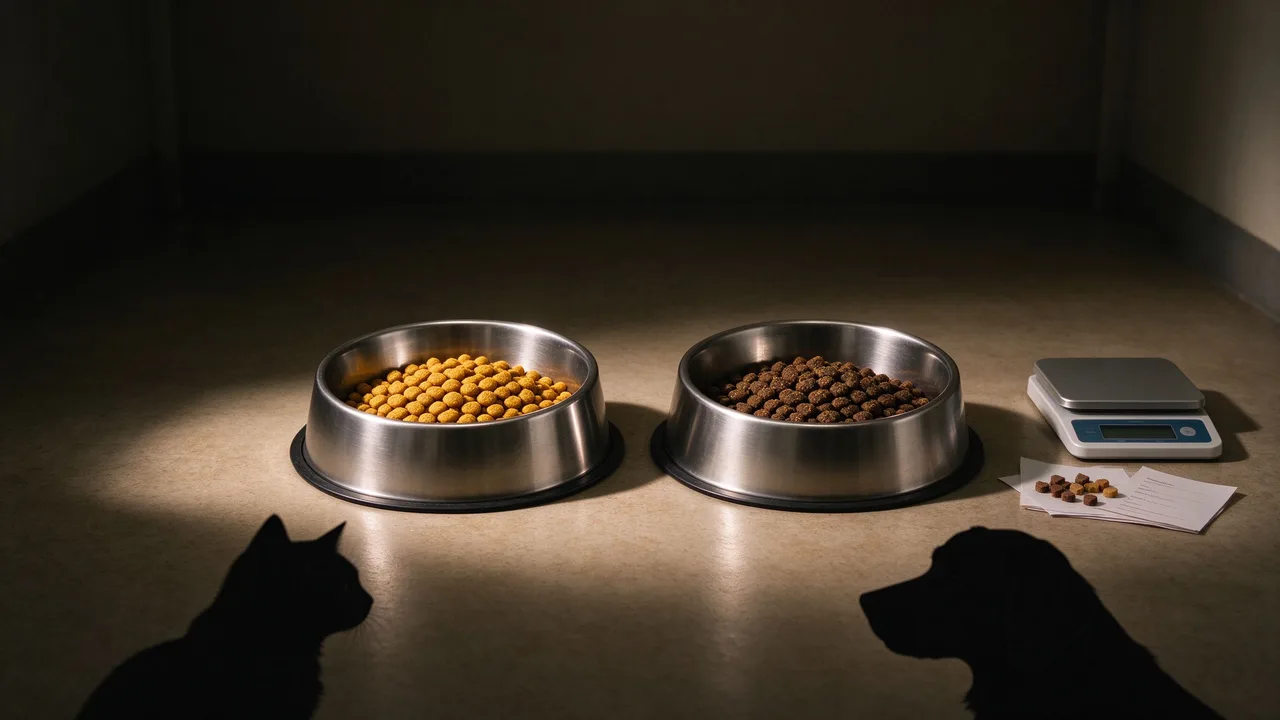
1: Two-Bowl Paired Preference Test
Two different samples are offered simultaneously in two bowls, usually observed for 15-30 minutes, with two recorded metrics:
- **First choice**: which bowl is approached and eaten first;
- **Intake ratio**: the proportion eaten from each bowl.
The two-bowl method compares relative preference, for example a new product against a baseline or competitor, to judge which one animals tend toward. Bowl left-right positions are rotated during testing to reduce position preference bias.
2: One-Bowl Acceptability Test
A single bowl is provided; offered and remaining weights are recorded to calculate intake ratio, measuring absolute acceptance of one formula. It is used when no comparison sample exists and the goal is judging whether the product itself is eaten.
3: Behavioral Observation as Supplement
Beyond intake data, eating speed, hesitation, repeated approach, licking, and vocalization are recorded as qualitative reference alongside quantitative intake; behavior alone cannot support a preference conclusion.
Reference Judgment Ranges (T/CVDA 54-2025)
The Chinese group standard T/CVDA 54-2025, *Technical Standard for Palatability and Tolerance Evaluation of Pet Food*, gives two-bowl reference judgment ranges (staple food and ingredient basis):
| Indicator range | Reference judgment |
|---|---|
| First choice <40%, willing-to-eat <40%, intake <50% | Poor palatability |
| First choice 40%-60%, willing-to-eat 40%-60%, intake 50%-70% | Medium level |
| Above these ranges | Better preference; see the full standard and test protocol |
Sample size, animal composition, test days, and environmental control all affect results; judgment follows the test protocol and full standard rather than a single intake ratio.
Why Two-Bowl Results May Differ From Home Feedback
The two-bowl test is a "relative preference" scenario: two foods are offered together and animals choose quickly under competitive pressure. Home feeding is an "absolute acceptability" scenario with low pressure and often owner interaction. The dimensions differ, so a high two-bowl preference can still leave leftovers at home, and vice versa. Before production, combine two-bowl comparison with one-bowl acceptability and small-scale feeding feedback.
Main Palatability Influencing Factors
1. **Ingredient composition and meat source**: animal protein, fat level, and flavor precursors affect scent and texture;
2. **Pellet texture**: extruded density, crunch, size and shape differ across baked, air-dried, and wet formats;
3. **Fat and flavor coating**: surface oil and flavor attachment level and uniformity affect aroma and mouthfeel;
4. **Moisture and texture**: wet gravy, puree fineness, shred chew affect eating experience;
5. **Temperature and freshness**: sample storage state and exposure time affect scent stability.
Pre-Production Testing and Co-Packer Workflow
1. Sampling Stage
The brand provides target positioning, comparison baseline (own legacy product or competitor), and applicable animals; the factory samples by formula, recording batch, process parameters, and coating plan.
2. Pilot Sample Testing
Samples first undergo two-bowl preference comparison and one-bowl acceptability records; ingredient ratio, pellet texture, or coating flavor are adjusted over rounds as needed, with each round retaining batch records for traceability.
3. Issue Attribution
When intake is low, check factors one by one: meat source and formula, pellet texture, coating uniformity, sample state; avoid reducing every issue to "bad taste," since different causes need different adjustment paths.
4. Trial Batch Recheck
Once formula direction is set, retest on a trial batch to confirm palatability matches lab samples under production process conditions; pilot and production lines differ in shear, moisture, and coating, so first-sample results alone cannot justify volume release.
5. Post-Launch Feedback Loop
After launch, collect repurchase, leftover rate, and feeding feedback to compare with earlier test data and feed the next formula optimization round.
Co-Packer Palatability Capability Checks
1. Standardized two-bowl/one-bowl test conditions available or coordinated externally;
2. Benchmark-based comparison sampling and multi-round adjustment capability;
3. Traceable adjustment records across formula, process, and coating stages;
4. Consistency protection between pilot, trial, and production samples;
5. Adjustable parameter range for pellet texture and oil coating;
6. How test data is archived alongside guarantees and inspection results.
Common Misconceptions
1: Smelling Strong to Humans Equals Good Palatability
Human scent preference differs from dogs and cats; palatability conclusions must come from animal intake observation, not human smell judgment.
2: One Two-Bowl Result Sets the Formula
Two-bowl results depend on sample size, position, and environment; combine one-bowl acceptability, behavioral observation, and multi-round retest before choosing formula direction.
3: Pilot Sample Pass Means Ready for Volume
Pilot and production lines differ in process conditions; arrange production scheduling only after trial batch retest passes.
Bottom Line
Pre-production palatability evaluation uses two-bowl preference for relative comparison, one-bowl for absolute acceptability, and behavioral observation as qualitative supplement, judged against group-standard reference ranges and the test protocol. The brand provides positioning and baseline; the factory owns sampling, test support, issue attribution, and batch record traceability; pilot, trial, and production are rechecked level by level to control palatability risk before volume release.
Brands needing new-product palatability testing support or multi-round formula adjustment can work with **Mixiaoqi pet food OEM/ODM** in Guangzhou on comparison sampling, two-bowl/one-bowl test coordination, pellet texture and coating plan adjustment, and trial batch retest.
---
FAQ
**Q: What two metrics does the two-bowl test record?**
A: First choice (which bowl is eaten first) and intake ratio (proportion eaten from each bowl); bowl positions are rotated to reduce position preference.
**Q: Why may a high two-bowl preference still leave leftovers at home?**
A: Two-bowl is a relative preference scenario while home is absolute acceptability, differing in pressure and interaction; combine one-bowl acceptability and small-scale feeding feedback.
**Q: Why retest on a trial batch before production?**
A: Pilot and production lines differ in shear, moisture, and coating; trial retest confirms palatability matches the pilot sample under production conditions before volume release.
Developing a fresh pet food product?
Share your target market, product direction, format and expected volume — we will help structure a project plan.
Submit a project brief