
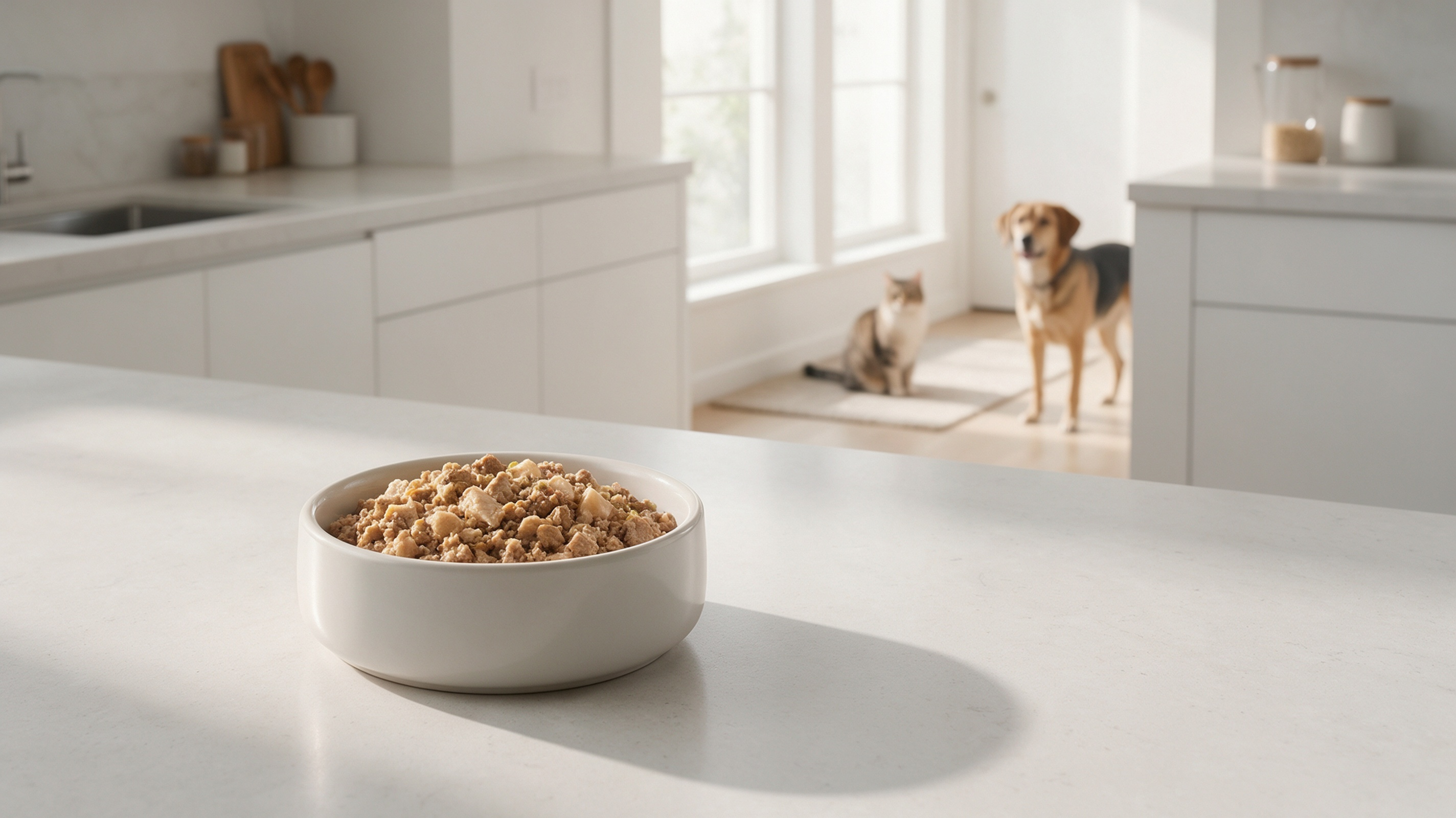
Core view: fresh food competition moves from concept to delivery capability
The market opportunity for fresh pet food is not simply launching more flavours; it is forming a consistent proposition across product positioning, nutritional design, processing and storage methods, and consumption scenarios. For brands, the trends worth prioritising include: further differentiation between cat and dog needs, a clearer boundary between complete and complementary feeding, more cautious functional claims, and procurement decisions that weigh quality documentation and total delivery cost. Specific opportunities still need to be assessed against target channels, price points and project conditions — sales cannot be inferred from the "fresh food" concept alone.
Trend one: from broad category to a defined feeding scenario
Consumers may use fresh food as a daily staple, or for mixing, rewards or stage-specific feeding. These scenarios correspond to different formulas, formats and usage instructions. A brand should first clarify whether the product targets cats or dogs and how it will be fed, then decide whether to develop a complete fresh food. A product designed for complementary feeding must not be presented as a staple that can be fed alone long term.
Format also shapes the purchase experience. Small packs are easy to try but can carry higher packaging and fulfilment cost; larger formats support continuous use but demand clearer storage guidance after opening. Compare target price point, usage frequency and channel delivery conditions in the same decision table when sourcing.
Trend two: complete fresh food needs verifiable nutritional evidence
"Visible ingredients" help consumers understand a product but do not replace nutritional design. Complete fresh food for cats and dogs should be developed around the target animal, nutritional goals, formula rationale and label information; different life stages or special positions cannot simply share one set of claims. Formula feasibility, applicable standards, validation items and acceptance criteria should be confirmed by both parties at the project definition stage.
When reviewing samples, brands should not only judge appearance, smell and palatability feedback; they should also ask the project team to explain the nutritional positioning and usage boundary. If evidence is insufficient, adjust the positioning or the wording — do not launch first and fill in the supporting materials later.
Trend three: functional fresh food moves toward specific needs and careful claims
Functional fresh food can be planned around a defined nutritional or usage need, but "functional" does not equal disease prevention, treatment or a guaranteed effect. Development should start by writing down the target user, the intent behind the formula design and the proposed marketing wording, then check whether each claim has supporting evidence. Claims that cannot be supported should be removed from packaging, product pages and sales scripts at the same time.
Instead of stacking several hard-to-explain concepts, let each product answer one clear question: who is it for, how is it fed, how does it differ from existing products, and what should not be over-interpreted.
Trend four: storage and delivery become part of product positioning
Chilled, frozen or other delivery options involve different packaging, logistics and end-shelf management requirements. The viable option must be assessed against the product process and the project — a product cannot be assumed to be shelf-stable simply because it has been steam-cooked. Brands should define sales regions, warehousing and distribution conditions, and how consumers receive and store the product early in development, before discussing format and expected shelf life.
Even a formula with good internal feedback will struggle to build repeat purchase if arrival condition is unstable or usage instructions are unclear. The delivery plan should not be left until after the formula is finalised.
Trend five: procurement comparison extends from price to total project cost
Future supplier comparisons should include, beyond per-unit processing price, the cost of formula adjustments, packaging, storage and transport, loss, after-sales handling and documentation maintenance. Cost structures can differ substantially between options; procurement leads should compare at the same specification and delivery conditions instead of looking only at ex-factory price.
At the same time, consumers' attention to ingredients, feeding methods and product information requires brands to set up a documentation review and update mechanism early. Explainable, checkable information serves long-term business better than claims that are hard to prove.
How to choose between OEM and ODM
OEM usually fits a brand that already has a fairly clear product plan and needs production execution assessed. ODM typically involves more product definition and R&D collaboration. The two are not quality levels; the actual division of work depends on the plan both parties confirm. Before starting, filter the direction with three questions:
- What is the product role: complete fresh food, functional fresh food, or steam-cooked treats? They must not share the same feeding and marketing logic.
- Where does differentiation come from: target and scenario, formula design, format, or channel service? Each difference should translate into a product requirement.
- What are the project constraints: among target price point, launch timing, expected channels and storage conditions, which can flex and which are mandatory?
Suggested process from project definition to launch
- Define the need: create a written brief covering target animal, product role, feeding scenario, channels and price point.
- Evaluate options: discuss formula direction, process and packaging suitability, and the standards, documentation and validation arrangements to be confirmed.
- Review samples: check usage experience, product positioning and the proposed label together, and record the reason for each change, so the final version is not decided on personal preference alone.
- Confirm delivery: agree quality requirements, batch information, storage conditions, exception communication and responsibility boundaries; specifics follow the plan both parties confirm.
- Review after launch: collect after-sales issues, arrival condition and user feedback to decide whether to optimise instructions, format, or reconsider the product design.
Risks to control early
First, positioning risk: presenting a complementary-feeding product as a complete staple, or writing nutritional intent as a treatment effect, can mislead. Second, delivery risk: if packaging, logistics and channel capability do not match, the actual arrival experience suffers. Third, cost risk: frequent changes to formula, format or launch plan alter the project budget and schedule. Brands should set a confirmation point for each key requirement, keep version records, and let R&D, procurement, marketing and channel teams work from the same product definition.
Checklist for brand-side project preparation
- Clarify the target animal, feeding scenario, and whether the product is a staple or a treat.
- Provide target channels, price point, sales regions and the expected launch schedule.
- List mandatory formula, packaging and usage-instruction requirements.
- Describe current warehousing and distribution conditions and how consumers may receive the product.
- Prepare the proposed claim copy and mark the statements that need evidence checks.
- Confirm who gives sample feedback, the decision maker, and how versions are approved.
Mixiaoqi provides fresh pet food OEM/ODM R&D and production services, covering complete fresh food for cats and dogs, functional fresh food and steam-cooked treats, with joint R&D by a professor team at South China Agricultural University. Specific product plans, validation requirements and delivery conditions are assessed against each project and follow the plan confirmed by both parties.
Frequently asked questions
What are the main future market trends for fresh pet food?
Brands should watch feeding-scenario segmentation, the nutritional basis of complete products, more cautious functional claims, and total storage and delivery cost. Specific opportunities must be assessed against channels and project conditions.
Can all fresh food serve as a daily staple for cats and dogs?
No. Whether long-term exclusive feeding is suitable depends on product positioning, nutritional design and the corresponding evidence; complementary-feeding products and treats should not be described as complete staples.
How should a brand choose a fresh pet food OEM or ODM?
Brands with a fairly clear product plan can focus on OEM execution; brands that need to define the product together can evaluate ODM collaboration. The actual R&D, production and documentation division follows the mutually confirmed plan.
Can functional fresh food promote treatment effects?
Nutritional or usage needs should not be presented directly as disease-treatment effects. Marketing wording must match product positioning and available evidence, and be reviewed before launch.
Why confirm storage and delivery early in a fresh pet food project?
Storage and delivery affect packaging, format, channel arrangements and arrival experience. The viable delivery solution and required validations must be assessed against the process and project conditions.
What should be prepared when discussing a fresh project with Mixiaoqi?
It is recommended to prepare the target pet, product role, feeding scenario, channels, price point, packaging needs and the proposed claim copy, so both parties can evaluate the R&D and production plan.
Developing a fresh pet food product?
Share your target market, product direction, format and expected volume — we will help structure a project plan.
Submit a project brief