
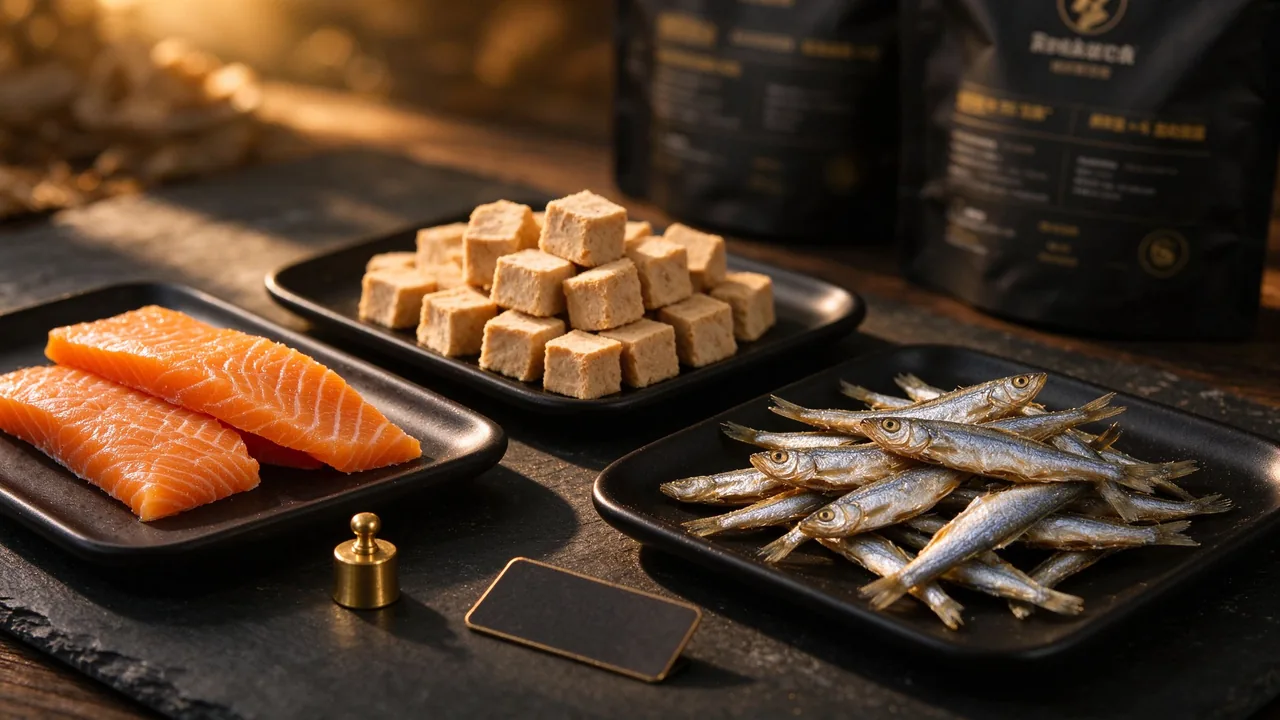
On November 24, Korean media reported a price notice that matters to anyone making pet treats for private label, and to any pet treat OEM pricing a catalog around whole ingredients: Harim Pet Food told retail partners that from December 11 it will raise prices on selected snacks and cooked fresh meals in its The Real and Bap-i-boyak ranges by an average of 9%, covering 94 of 106 SKUs.
The reasons given are ordinary and specific: higher raw material, packaging, production and transport costs, plus supply chain uncertainty. The company singled out El Niño-driven increases in salmon and pollack. Read alongside it, Royal Canin Korea announced a December 1 increase without item-level detail, Purina Korea raised Cat Chow Indoor 2.86 kg from KRW 26,900 to 29,600 and Pro Plan Performance 30/20 Chicken 17 kg from KRW 95,000 to 121,000 in February, and Monge Korea raised dry food the same month. The pattern is not a uniform percentage across a catalog. It is tiered by raw-material exposure, and that is exactly what a pet treat OEM has to price for.
What was actually repriced
- Whole-ingredient treats: fillets and freeze-dried treats in The Real range, where the product is essentially one piece of raw material.
- Cooked fresh meals: selected items, currently around KRW 3,100–3,200 on the company store.
- Biscuits and ball snacks: health cookies, health balls and daily yanggaeng in Bap-i-boyak, with small packs starting around KRW 1,000.
- Current shelf prices for The Real treats run about KRW 1,800–3,700. At an average 9%, that is roughly KRW 200–300 per item, an estimate from the average rather than a published item-level figure.
Why whole-ingredient SKUs move first
Three structural reasons.
First, raw material is most of the cost. A fillet or a chicken breast is mostly raw material, with a thin layer of packaging and processing on top. A ten percent move in the fish market goes almost straight into total cost.
Second, substitution is limited. Extruded kibble can shift between meat meal, grains and plant proteins; a formulation change absorbs part of the increase. A whole-ingredient treat is the ingredient. Swapping species changes the selling proposition, not just the cost sheet.
Third, the specification is narrow and volatile. Fish depends on the season, fish size and weather; a change in yield moves unit cost immediately. El Niño affecting salmon and pollack supply is precisely what the notice named.
An average of 9% is not 9% per bag
An average hides at least three things:
- Item weighting. A few tens of won on a high-priced item barely moves the weighted average; KRW 200–300 on a low-priced item can be a double-digit increase.
- Channel contracts. Retail, platform and specialty channels have different notice periods and effective dates; brands often absorb part of the increase before passing it on.
- Price-band psychology. Crossing a band, say KRW 3,900 to 4,200, is felt more than the percentage itself, so brands stop short of the line.
For a buyer, the implication is simple: do not budget the year on an average. Budget SKU by SKU.
Four numbers to fix in a pet treat OEM quotation
When raw material moves, quotations get vague. Separate these four.
1. Raw-material share. Raw material cost as a percentage of total price. When it is low, an adjustment clause can stay simple; when it is high, it needs its own page.
2. Pricing basis. Salmon can mean whole fish, fillet or trim; frozen or chilled; a protein and moisture specification. Species, grade, origin, moisture and protein range: all four are needed before two quotes are comparable.
3. Validity and trigger band. Thirty to ninety days is common; shorter for fish and fresh meat. State whether an adjustment triggers at plus or minus five percent or eight percent, and whether the review is monthly or quarterly.
4. Substitution and downgrade. Which species and grades may replace which, how labels and guaranteed analysis follow, and who carries the time cost of re-signing artwork.
Writing market-linked pricing in four words leaves the interpretation to whoever argues last.
A simple exposure triage for brands
Sort the catalog into three tiers:
- High: whole-ingredient treats, freeze-dried items, single-source fish protein.
- Medium: fresh meat plus meat meal blends.
- Low: grain- and plant-protein-based formulas.
Lock prices from the top down. Put promotional budget behind low-exposure SKUs. Give high-exposure SKUs a planned review window, and avoid making one fish species the only selling point in copy, so substitution has room.
Three reminders for buyers sourcing in China
1. Look at sourcing radius and fishing season, not only the spot price. Seasonality and grade changes decide next year yield.
2. Put yield into the cost model. Fillet trim loss and freeze-drying water loss are cost lines, not something the factory absorbs.
3. Attach a raw-material snapshot to the quote: prices, grades and suppliers on the signing date, as the baseline for later adjustments. Without a snapshot, a trigger has no starting point.
This kind of cost move does not stay in one market. For a brand planning whole-ingredient treats, writing raw-material share, pricing basis, validity and substitution into the contract is worth more than arguing over a percentage point later. For pet treat OEM work, the quotation that wins is the one that fixes these four items first. Mixiaoqi pet food OEM/ODM starts whole-ingredient and freeze-dried projects with a raw-material exposure sheet, then discusses price and schedule.
FAQ
Q1: If the average is 9%, does every product rise 9%?
A: No. Nine percent is a weighted average. Item weighting, channel contracts and price bands differ, so individual items land above or below it.
Q2: Why are whole-ingredient treats more sensitive than kibble?
A: Raw material is a larger share of cost, substitution is narrower, and the specification is single and weather-dependent. A yield change moves cost at once.
Q3: How long should a pet treat OEM quotation stay valid?
A: Thirty to ninety days is common. For fish and fresh meat, shorter is safer, with a stated trigger band and review rhythm.
Q4: If the customer supplies the raw material, does the price risk disappear?
A: The price risk moves, but acceptance, loss, supply interruption and label consistency still sit with the factory and belong in the contract.
Developing a fresh pet food product?
Share your target market, product direction, format and expected volume — we will help structure a project plan.
Submit a project brief