
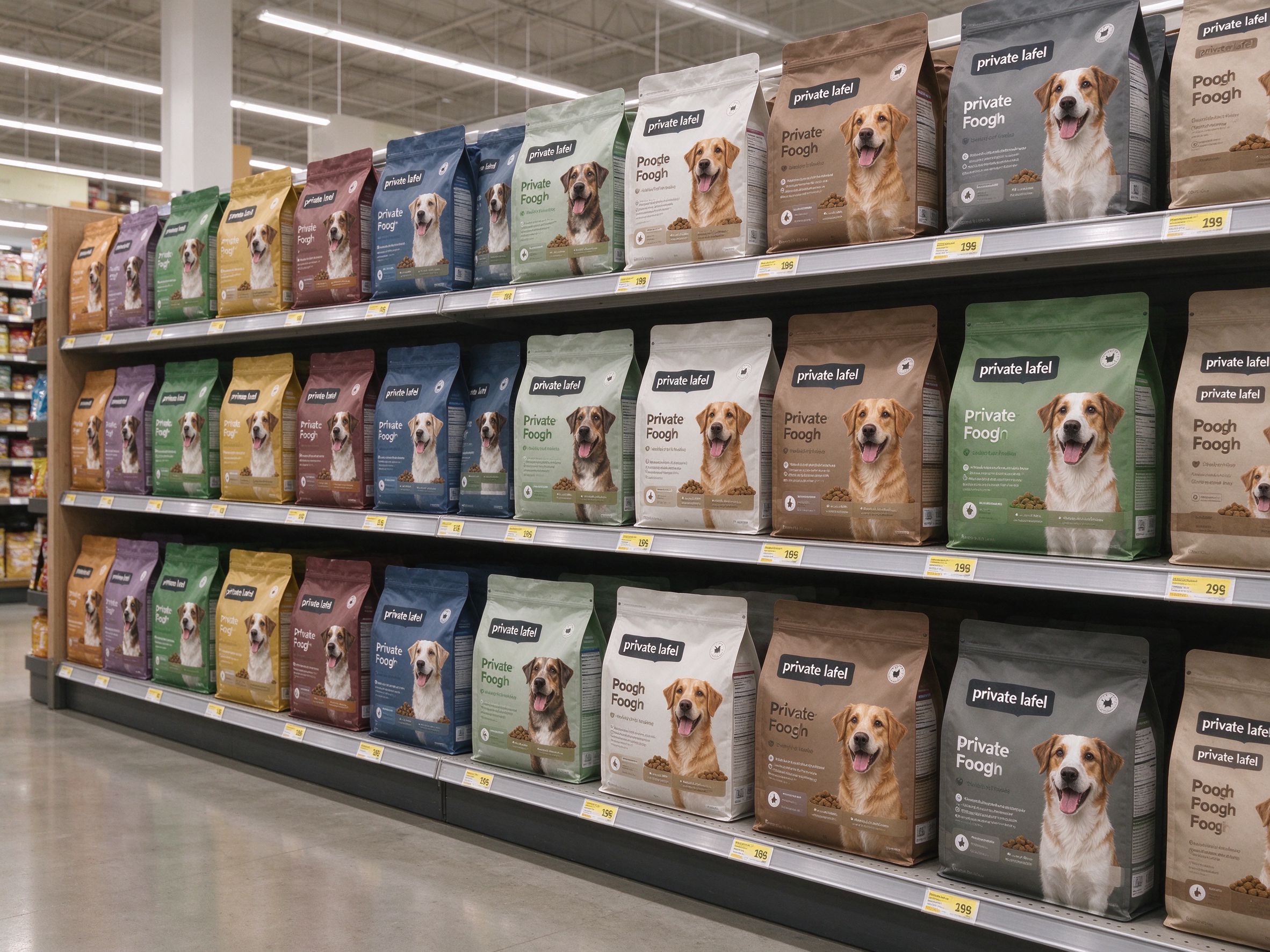
UK pet food veteran Burgess Pet Care made a quiet but telling move last month: it launched a white-label pet food range for independent retailers, including a 12.5 kg dry dog food and a 10 kg dry cat food, built specifically for store brands.
Around the same time, Packaging World reported that private label and contract processing are the core growth drivers projected to take the global pet food processing market to USD 10.39 billion by 2034.
Put together, white-label pet food is moving from "cheap alternative" to a standard playbook for both brands and retailers.
Why private label is heating up now
Retailers want their own margin
Big chains and pet specialty stores are done earning only slotting fees. Store-brand products carry 15-25 percentage points more margin than third-party brands, and they lock in repeat visits.
DTC founders do not want to build factories
Most modern pet brand founders come from marketing and content, not manufacturing. They want a co-packer that can handle production while they focus on community and paid acquisition. That is exactly what OEM/ODM exists for.
Supply chain has matured
A decade ago, fresh pet food co-manufacturers could be counted on one hand. Now retort, freeze-dried, baked, and fresh-steamed lines are all mature, and the minimum order barrier for private label has dropped sharply.
What brands should look for in a white-label factory
1. An existing ODM formula library. Do not start from scratch.
2. Flexible MOQ. The first order for a new brand should not be a bet-the-company run.
3. Packaging capability. Single-serve pouches, stand-up bags, different formats.
4. Channel-ready certifications. Retailers will audit what the factory holds.
How co-manufacturers can capture the wave
- Stock a ready-to-use formula library to shorten decision time
- Offer one-stop service from packaging design to label compliance
- A small-batch pilot program is the best customer-acquisition tool
Mixiaoqi pet food OEM/ODM specializes in new brands and retail channel customers. Its fresh food formula library covers all-life-stage cat and dog recipes, with a 50g/100g single-serve pouch line that supports small-batch runs. If you are planning your own white-label pet food line, the first sample batch can be ready in as little as four weeks.
FAQ
**Q: What is the difference between white label and OEM?**
A: White label means the factory has an existing formula and packaging; the brand just adds its label. OEM is broader and includes custom formulation.
**Q: Are white-label MOQs lower than custom OEM?**
A: Usually 30%-50% lower, because formula development costs are already absorbed.
**Q: What should independent retailers watch for?**
A: Label compliance and batch COAs must come from the factory, or the retailer will reject the product at shelf stage.
Frequently asked questions
白标和OEM有什么区别?白标用工厂现成配方贴牌,OEM含定制配方。
白标起订量更低吗?通常低30%-50%。
Developing a fresh pet food product?
Share your target market, product direction, format and expected volume — we will help structure a project plan.
Submit a project brief