
# Retailers Are Launching Their Own Pet Food Brands: What It Means for New Brands and Co-Manufacturers
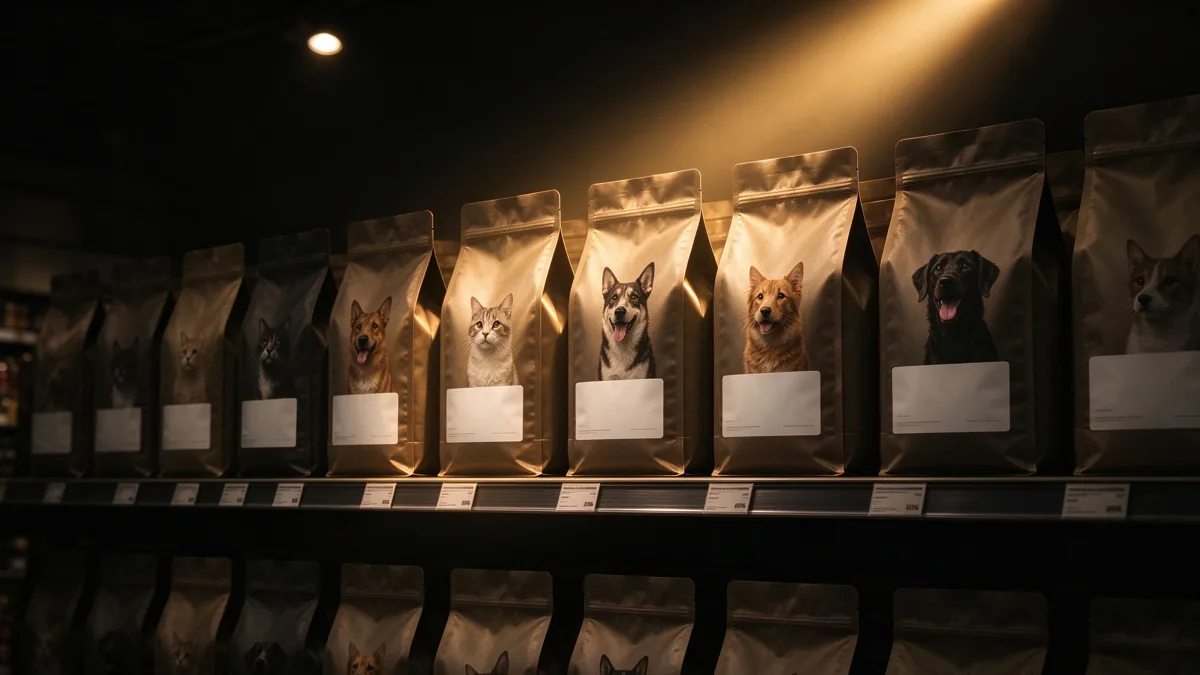
A clear signal came out of the UK this week: long-established Burgess Pet Care launched a **white label dry food range** specifically for independent retailers—a 12.5 kg dog food and a 10 kg cat food, ready for stores to put their own brand on.
It is not an isolated move. Market research firm Accio noted in mid-October that retailers and DTC brands are heavily investing in **private label**, driving strong demand for flexible OEM partners.
For Chinese teams launching new brands or evaluating co-manufacturers, this shift matters in two ways.
1. Private Label Is No Longer Just for Big Grocers
"Own brand" used to mean Walmart or Sam's Club. Now:
- Independent pet shops, neighborhood stores and vertical e-commerce brands are launching their own lines;
- DTC brands, content IPs and even creator channels want "their own bag";
- Co-manufacturers are shifting from a few big clients to hundreds of smaller brands.
The consumer shift behind this is real: younger buyers care less about the big-logo brand and more about the endorsement of the shop or creator they already trust.
2. For New Brands: You Are Competing With Retailer Own Brands
If you are launching a new brand, your real competitors are not Royal Canin or Orijen. The items taking shelf space and traffic are:
- The local pet shop's own bag;
- A top creator channel's exclusive SKU;
- A vertical platform's private label.
They have direct channel access, better margin and pricing flexibility. New brands win through **formula differentiation, consistent quality and storytelling**.
3. For Co-Manufacturers: Flexibility Beats Scale
Retailer private label lines have a distinct profile:
- Smaller runs, but fast packaging and spec changeovers;
- Less predictable volumes, but frequent reorders;
- The customer often does not understand formulation and needs off-the-shelf recipes.
This is not what large traditional co-manufacturers are built for. Whoever offers **small-batch, multi-spec, modular recipes and quick packaging changeovers** will capture this wave.
4. How New Brands Should Ride This
If you are launching now:
1. Do not push big inventory first. Start with small-batch pilot runs to lock quality;
2. Build one clear formula differentiator (fresh meat ratio, a specific ingredient, a life stage);
3. Early on, work with 1-2 vertical channels or creator channels rather than trying every platform;
4. Get label and compliance right from the first version to avoid rework.
Closing
**Private label pet food** is not a threat from big brands—it is a reorganization of the supply chain. For new brands it means more competition but more open channels. For co-manufacturers it means small-batch flexibility, modular recipes and fast changeovers are worth more than pure scale.
> If you are a retailer, DTC brand or content IP and want to launch your own pet food line, we can start with formula sampling and a small-batch pilot.
Developing a fresh pet food product?
Share your target market, product direction, format and expected volume — we will help structure a project plan.
Submit a project brief